Percussion is one of the easiest and most natural ways for homeschoolers to experience music education at home. In this short 15-minute music lesson, your children will learn “What is percussion?” and explore rhythm using their own bodies (body percussion), as well as listen for percussion in real music.
No musical background required!
What Is Percussion?
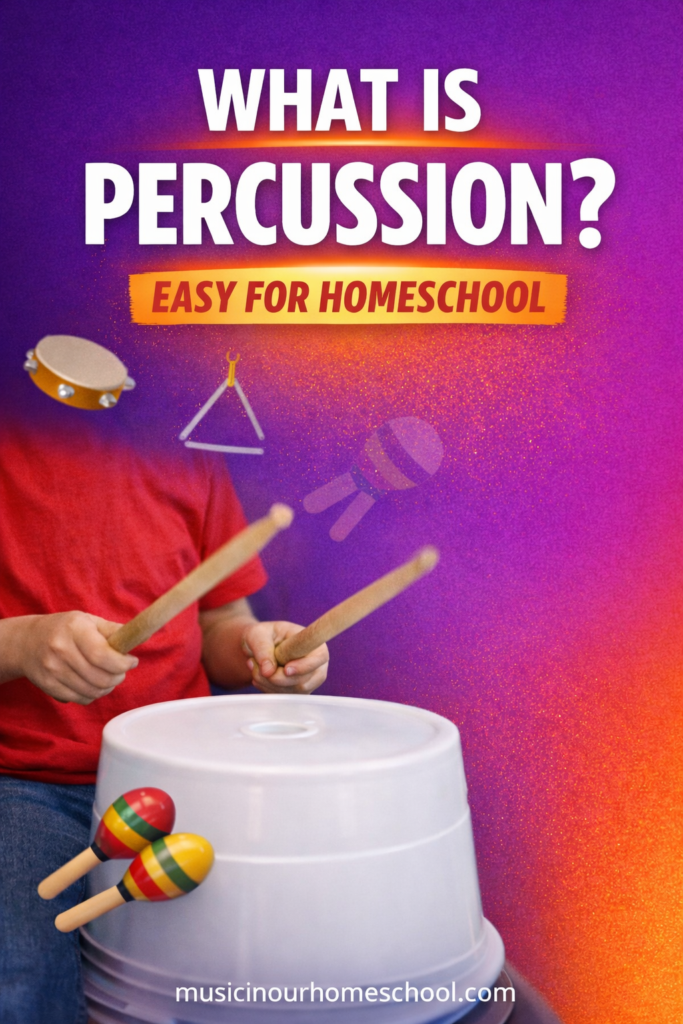
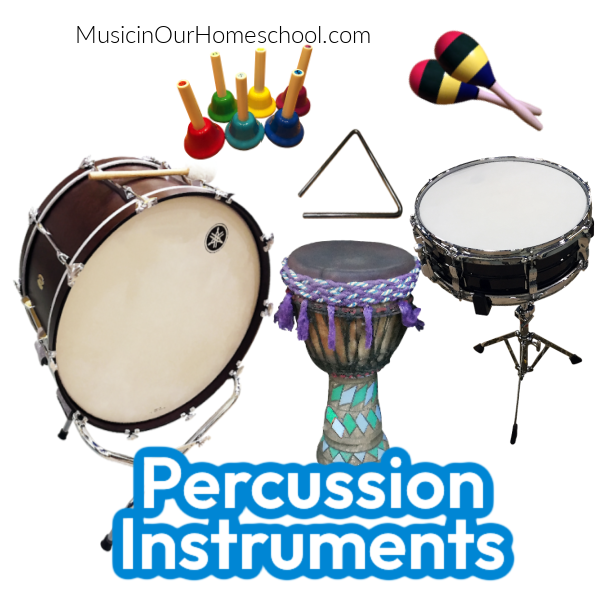
Percussion instruments are those that make sound when they are struck, shaken, or scraped. For example, you strike or hit a drum, cymbals, a wood block, and a marimba. You shake maracas or a tambourine, and you scrape a guiro.
Percussion gives music its beat—the steady pulse we clap, tap, or march to.
Ask your students:
Can you think of something that makes a sound when you hit it?
Body Percussion (No Instruments Needed!)
There is a way to make percussion sounds and beats without playing an instrument. Just use your body!
Try these together:
Clap a steady beat
Stomp your feet
Pat your knees
Snap fingers
Activity: Play some music and create a body percussion pattern such as clap-clap-stomp-stomp to do while listening.
Two Types of Percussion
Unpitched Percussion
These instruments do not play specific notes
They are mostly about rhythm
Examples are:
Drums
Cymbals
Tambourines
Shakers
Kitchen pot with wooden spoon
Pitched Percussion
These instruments do play musical notes
They can play melodies or add to a harmony
Examples:
Xylophones
Glockenspiels
Marimbas
Timpani drums
Listening Activity — Find the Percussion
Choose one short piece of music (any style works):
Classical
Folk
March
Movie soundtrack
Instructions:
Sit quietly and listen
Raise your hand when you hear percussion
Gently tap the beat on your knees
Ask after listening:
What percussion sounds did you hear? Was it a drum set in a pop song? Or, timpani drums and snare drums in a classical piece?
Was the beat fast or slow?
How did the rhythm make the music feel?
Everyday Percussion Exploration
You don’t need to purchase special instruments to make percussion music.
Ideas to make your own percussion instruments from things you have at home:
Kitchen pan and wooden spoon
Rice in a sealed empty water bottle
Box or bucket that you drum on
Beads in a sealed plastic Easter egg
Activity:
Tap a simple pattern (1-2-3-4)
Have your child echo it back
For older students:
Try long and short sounds and have them echo
Try loud and soft tapping and have them echo
Wrap-Up & Reflection About Percussion Instruments
Ask one or two questions:
What did you enjoy most today?
Was it easier to clap or tap?
Do you notice percussion in music you already like?
Percussion helps us feel music, not just hear it.
Feel free to repeat this lesson another day—repetition builds confidence!
Optional Extensions for Learning about Percussion (Use Another Day)
March to music
Clap rhythms from songs while you sing them
Explore percussion from other cultures
How This Lesson Fits the 15-Minute Music Method™
Short & focused — easy to fit into real homeschool days
No prep — no instruments or experience required
Multi-age friendly — everyone participates at their level
Repeatable — try again next week with different music
Small moments, done consistently, build real musical growth.