If you’ve ever said those words—or even just thought them quietly—you are not alone. I hear this phrase more than almost any other from homeschooling parents who deeply value music and the fine arts and want to confidently teach music, yet feel unsure how to include them consistently at home.
And here’s the good news I want you to hear right away: you do not need to be musical yourself to give your children a rich, meaningful music education.
In fact, some of the most beautiful and lasting music learning happens in homes where parents don’t feel like experts at all.
Let’s gently unpack why that is—and how you can move forward with confidence.
What Parents Really Mean When They Say “I’m Not Musical”
When homeschool parents tell me they’re “not musical,” they usually don’t mean they dislike music. Most of the time, they mean something like this:
I never took music lessons as a child
I don’t know how to read music
I can’t sing on pitch
I don’t play an instrument
I’m afraid I’ll teach it wrong
Those fears are real. And they make sense, especially if your own music education felt intimidating, exclusive, or performance-focused.
But they’re also based on a misunderstanding of what music education in a homeschool setting is meant to look like.
Music at Home Is Not About Performance or Perfection
In a homeschool, music is not primarily about mastery, recitals, or technical achievement.
Those things can come later, especially through private lessons if your child chooses that path. But at home, music serves a different purpose.
Music in your homeschool is about:
Exposure
Experience
Enjoyment
Curiosity
Connection
It’s about helping your children hear music, notice music, and value music as part of everyday life.
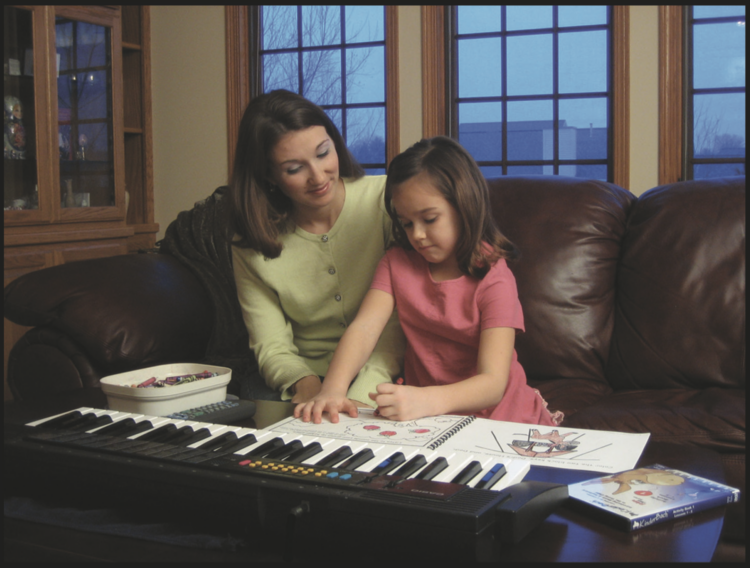
Your child does not need you to be an expert. They need you to be present.
A Simple Shift That Changes Everything: Redefining Your Role
One of the most freeing changes you can make is redefining what your role actually is when it comes to music.
You are not required to be “the music teacher.”
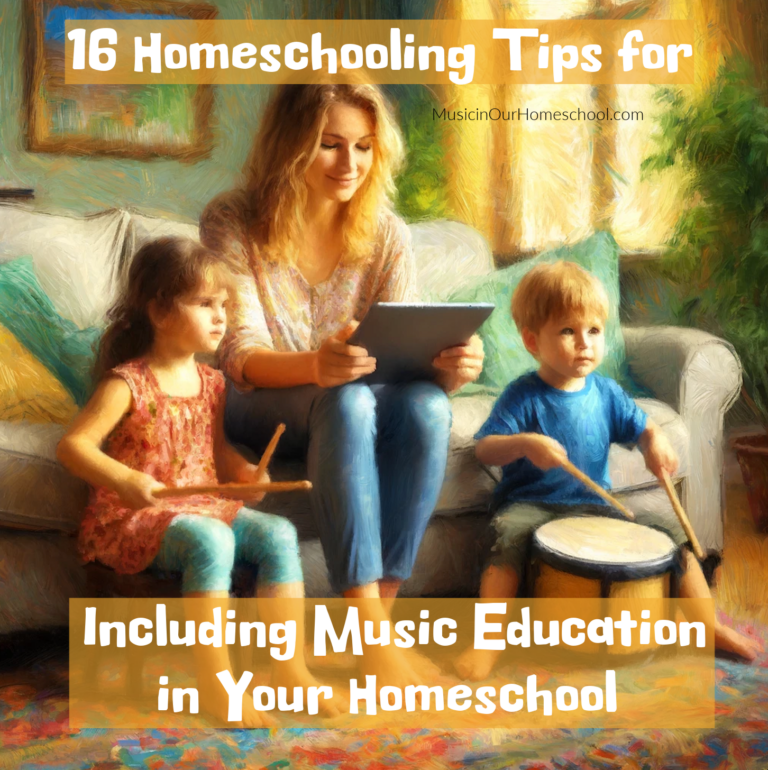
Instead, I encourage parents to think of themselves as wearing three simple hats:
1. The Guide
You open the door. You press play. You choose the resource or the moment. You create space for music to enter your home.
2. The Cheerleader
You encourage curiosity. You celebrate noticing. You model interest instead of correctness.
Fifteen minutes is short enough that you don’t dread it—but long enough to make a real impact when it happens regularly.
You don’t need to know a lot. You just need to show up.
Understanding R.H.Y.T.H.M.: A Better Way to Think About Music Education
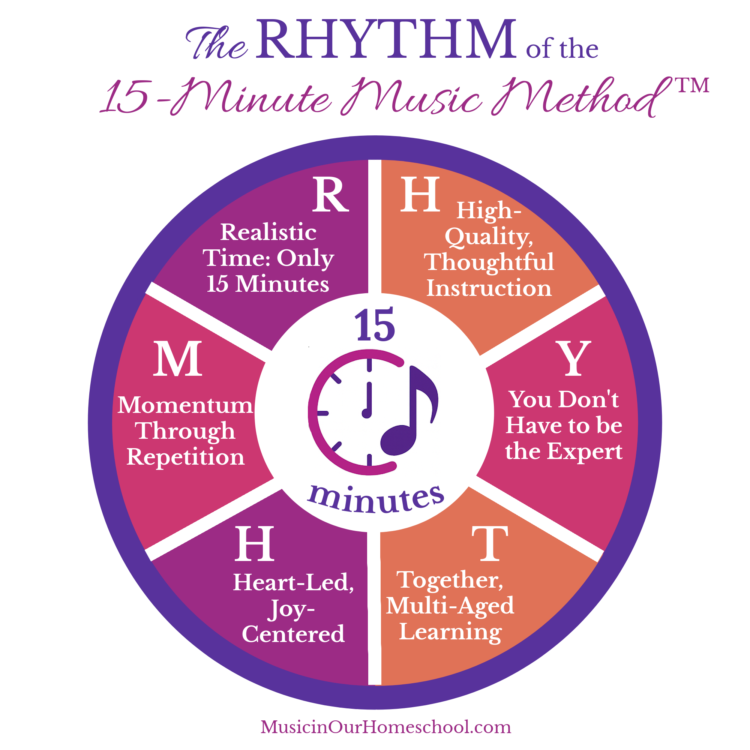
The 15-Minute Music Method is supported by a framework I call R.H.Y.T.H.M., which gives homeschool parents permission to approach music differently.
Here’s what it means:
R — Realistic Time Music fits into real homeschool days. Fifteen minutes is enough.
H — High-Quality Instruction Your children still deserve musically sound, thoughtful teaching—without overwhelming you.
Y — You Don’t Have to Be the Expert You facilitate. The expert teaches. This is a strength, not a weakness.
T — Together (Multi-Age Learning) One lesson can serve multiple children at once, simplifying your day.
H — Heart-Led and Joy-Centered Music is rooted in delight, curiosity, and connection—not pressure.
M — Momentum Through Repetition Small, repeatable experiences build confidence over time.
When parents say, “I’m not musical,” they’re usually reacting to a picture of music that feels technical or intense. R.H.Y.T.H.M. replaces that with consistency and joy.
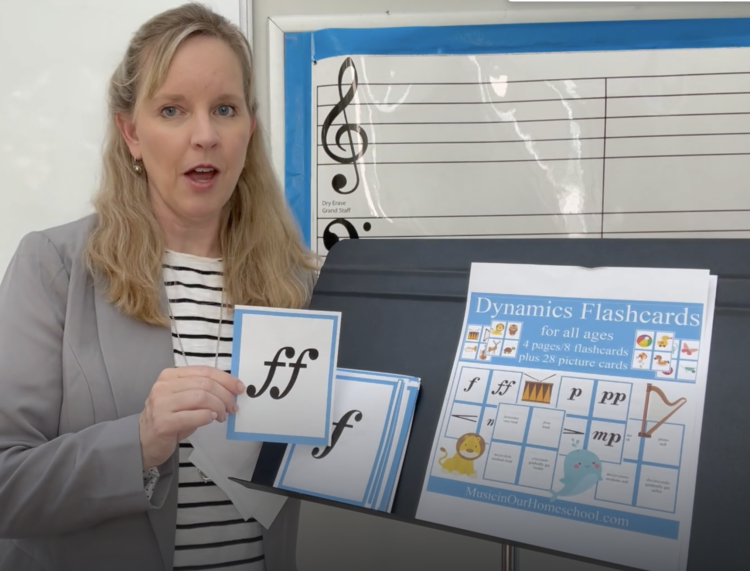
You Are Allowed to Use Expert-Created Resources
One of the most freeing realizations for homeschool parents is this:
You don’t have to do all the teaching yourself.
Using expert-created music resources doesn’t mean you’re “outsourcing” something important. It means you’re wisely choosing tools that support your family.
Your role becomes:
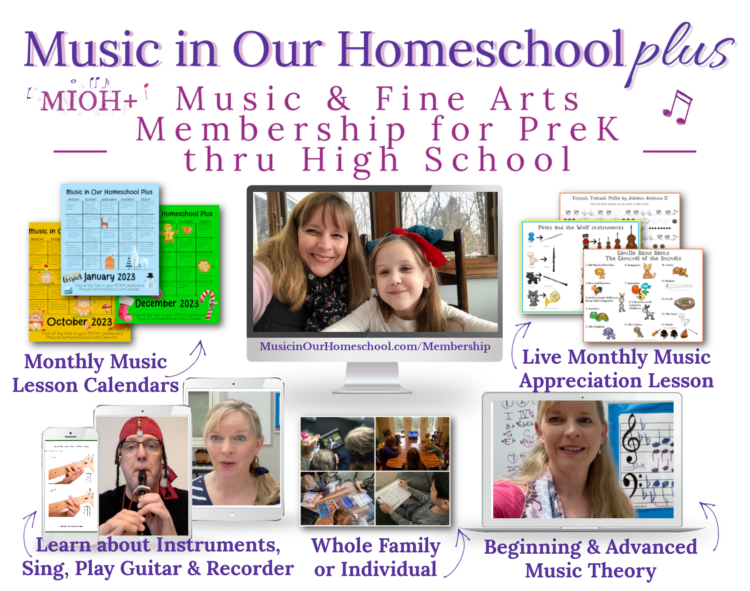
Pressing play on a short lesson
Listening to a curated piece together
Reading a story about a composer
Asking a simple question afterward
You don’t need to plan the sequence. You don’t need to stay ahead of your child. You don’t need to know what comes next.
You simply create the habit and the environment.
Learning Music Alongside Your Children Is a Gift
Some of the most powerful homeschool moments happen when children see their parents learning too.
When you say, “I’ve never learned this either,” you:
Remove pressure from both of you
Model lifelong learning
Show that curiosity doesn’t end with adulthood
And music offers so many pressure-free ways to learn together:
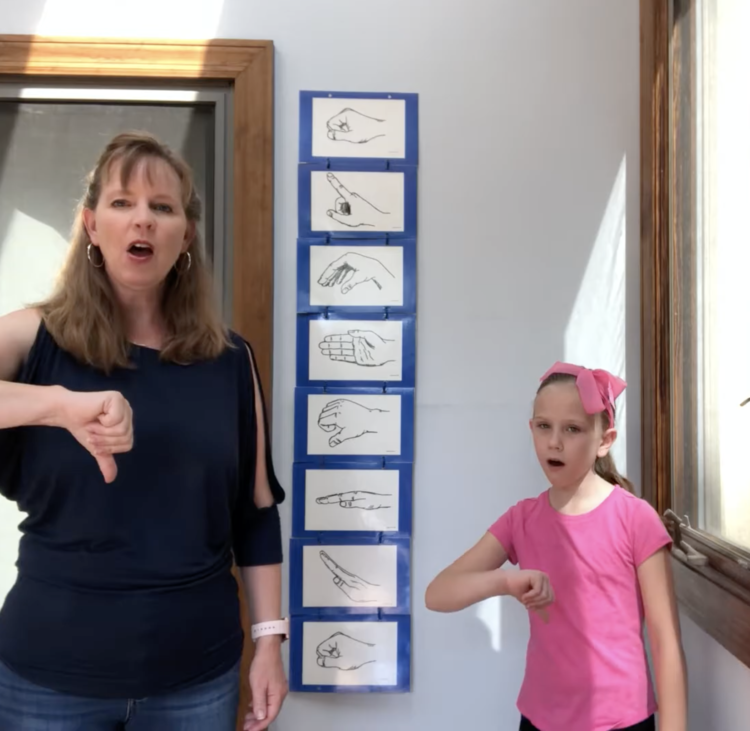
Echo clapping or simple rhythm games
Singing together, imperfectly
Listening and talking about what you notice
Drawing or painting while music plays
Moving or dancing just for fun
These moments may not look like “school,” but they absolutely are learning—and they’re often the moments children remember most.
Let Music Become Part of Your Home’s Rhythm
Music doesn’t need a special classroom or perfect setup.
Often, it works best when it’s woven naturally into daily life:
Playing music during chores
Using calming music during quiet time
Creating simple playlists for moods or seasons
Connecting music to holidays or history
Attending local concerts, recitals, or musicals
When music becomes part of your family rhythm, it stops feeling like another subject to manage and starts feeling like a gift you enjoy together.
You’re not adding something new to your plate—you’re layering beauty into what’s already there.
You Don’t Have to Be Musical. You Just Have to Begin.
If you’ve been telling yourself, “I’m not musical,” I hope you see this clearly now:
Music in your homeschool was never meant to depend on your expertise. It was meant to depend on your presence.
Fifteen minutes. A willing heart. A little consistency. And a rhythm built on joy instead of pressure.
That’s how music takes root. That’s how confidence grows. And that’s how your children come to see music not as intimidating—but as welcoming, meaningful, and full of life.
You’ve got this. And you don’t have to do it alone.