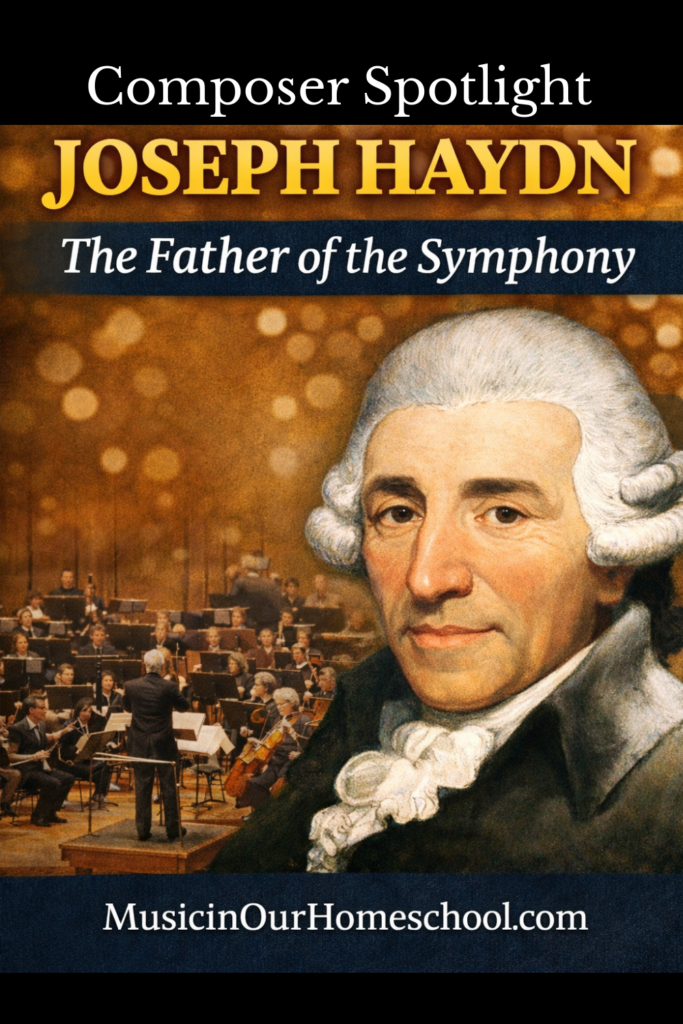
If you’ve ever listened to a symphony orchestra—whether at a live concert, in a movie soundtrack, or even in a cartoon—you’ve experienced something shaped in a big way by Joseph Haydn. His influence runs so deep that he’s often called the Father of the Symphony. That’s not just a catchy title—it’s a reflection of how much he helped define what a symphony actually is.
But Haydn’s story isn’t just about music history. It’s about perseverance, creativity, and even a little humor along the way.
A Musical Beginning in an Unlikely Place
Haydn was born in 1732 in the small Austrian village of Rohrau. It wasn’t a musical hub by any means. His father was a wagon maker, and his mother worked as a cook. Yet music still found its way into their home. His parents loved to sing, and young Joseph quickly showed a natural ability.
At just six years old, he left home to live with a relative who could provide better musical training. That’s a big step for such a young child, and life wasn’t easy. Still, he learned to play instruments like the violin and harpsichord and began developing the skills that would shape his future.
His singing voice eventually earned him a place as a choirboy at St. Stephen’s Cathedral in Vienna. For a time, this gave him stability and musical growth. But like all boys, his voice changed. When it did, he lost his position—and suddenly, he was on his own.
Learning the Hard Way
This part of Haydn’s story is especially encouraging for homeschool families.
Without a steady job, he pieced together a living by teaching, performing, and taking on whatever work he could find. During this time, he made a decision that would change everything: he began teaching himself how to compose.
He studied books. He practiced. He struggled. And slowly, he improved.
There’s something refreshing about that. His success didn’t come from a perfectly structured path or an elite education. It came from persistence. It’s a good reminder that growth often happens in the middle of uncertainty.
The Esterházy Years
Eventually, Haydn was hired by the wealthy Esterházy family. This was a turning point.
At their palace, his role was clear: compose music, lead the orchestra, and provide entertainment. He stayed there for nearly 30 years. While that might sound restrictive, it turned out to be exactly what he needed.
The palace was somewhat isolated from major musical centers. Haydn later said, “I was cut off from the world, so I had to become original.”
And original he became.
During this time, he composed over 100 symphonies. With fewer outside influences, he experimented, refined his style, and developed the structure we now recognize as the standard symphony.
What Is a Symphony, Anyway?
Before Haydn, symphonies existed—but they weren’t consistent in form. Haydn helped bring order and clarity.
A typical Haydn symphony has four movements:
A fast and energetic opening
A slower, more expressive second movement
A dance-like third movement (often in 3/4 time)
A lively and exciting finale
That structure might sound familiar—and it should. It became the model that composers followed for generations.
Because of this, Haydn didn’t just write symphonies. He helped define them.
A Composer with a Sense of Humor
One of the most delightful things about Haydn is that he didn’t take himself too seriously. He had a playful personality, and it showed up in his music.
Take the Surprise Symphony (No. 94). The second movement begins very softly—so softly that it might lull a listener into relaxing just a bit too much. Then, out of nowhere, there’s a sudden loud chord.
It’s unexpected. It’s funny. And it works.
Some say Haydn included this moment to wake up sleepy audience members. Whether or not that’s true, it certainly gets attention. It’s also a great way to teach students about dynamics—the contrast between soft and loud in music.
Another example is the Farewell Symphony (No. 45), which tells a story without using words.
At the time, the musicians working for the Esterházy family were required to stay at the palace for long stretches. They missed their families and wanted to go home. Instead of writing a letter, Haydn wrote a symphony.
At the end of the piece, something unusual happens. One by one, the musicians stop playing, blow out the candles on their music stands, and leave the stage. By the final moments, only two violinists remain, playing quietly.
The message was clear—and it worked. The prince allowed the musicians to return home.
Joseph Haydn: A Lasting Influence
Later in life, Haydn became well known across Europe. He even traveled to London, where he composed some of his most famous works, including his final symphony, No. 104.
He also played an important role in mentoring a young composer named Ludwig van Beethoven. Beethoven would go on to expand and transform the symphony even further, but he built on the foundation Haydn created.
Haydn lived to the age of 77, passing away in 1809. By that time, his influence was firmly established.
Why Haydn Still Matters Today
There’s something about Haydn’s story that feels especially relevant for homeschool families.
He didn’t come from wealth or prestige. He didn’t follow a perfectly smooth path. He learned through effort, curiosity, and determination. And along the way, he found ways to bring joy into his work.
When your students listen to Haydn’s music, they’re not just hearing notes arranged in a pattern. They’re hearing the beginnings of something that shaped centuries of music to come.
So the next time you hear a symphony, listen for those four movements. Notice the contrast, the structure, the energy. And remember that much of what you’re hearing can be traced back to one composer who, in his own quiet and creative way, changed music forever.
If you’d like to explore Haydn’s music further, be sure to listen to selections like the Surprise Symphony and the Farewell Symphony. They’re not only enjoyable—they’re memorable in the best possible way.
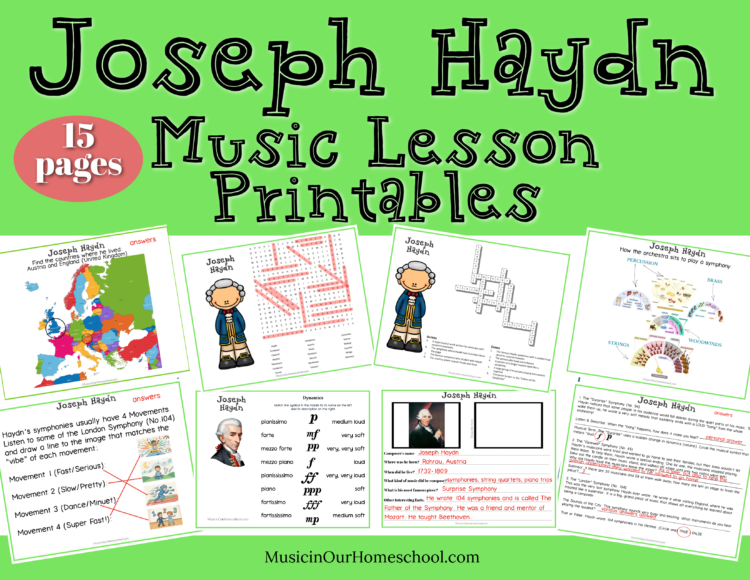
Use this Freebie with today's 15-minute music lesson