Booking your first guitar lesson can feel a little nerve-racking. You might worry that you'll look clumsy or that the teacher will expect you to know more than you do. The good news is that teachers work with total beginners all the time, and a first lesson is built for people who have never played a note. Here is what to bring, what happens once you sit down, and how to spend your first week of practice.
Start With a Trial Lesson
A trial lesson is the easiest way to begin. It is short, it usually costs less than a regular lesson, and you don't have to commit to anything. You get to meet the teacher, see the studio, and find out if the two of you work well together.
Many music schools will also lend you a guitar for the trial, so there's no need to buy one first. Foundations Music Academy in Columbus, Ohio, for example, offers trial lessons with loaner guitars and matches each student with a teacher based on age, goals, and the music they like. If you live in central Ohio, their private guitar lessons are a good way to see what a well-run first lesson looks like.
What to Bring to Your First Guitar Lesson
Your Guitar
If you own a guitar, bring it in a case or gig bag. Electric players should ask ahead of time whether the studio has an amp and cable. If you don't have one yet, hold off on buying. Your teacher can help you pick the right type and size, which matters a lot for young kids.
A Few Small Extras
Pack a couple of medium picks, a clip-on tuner, and a notebook. Some students also record the last few minutes of the lesson on their phone, when the teacher goes over what to practice.
Songs You Want to Play
This is the most useful thing you can bring. Write down two or three songs you would love to learn. It tells your teacher right away what style to focus on, and it keeps lessons fun.
What Happens During the Lesson
Getting to Know You
Most first lessons start with a few questions. Have you played before? What music do you listen to? Do you want to play around a campfire, join a band, or play at church? How much time can you practice each week? Your answers shape everything that comes next.
The Basics
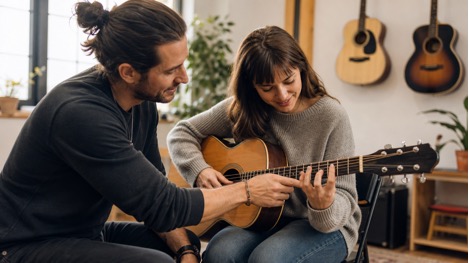
Next, your teacher will show you how to sit, hold the guitar, and grip a pick. They will also tune the guitar with you and explain why you should tune every time you play. These early habits are much easier to learn the right way than to fix later.
Your First Chords
Many teachers start with easy shapes like E minor and G, along with a simple down-strum. Your chords will probably buzz or sound muffled at first. That is normal, and it gets better quickly with practice.
Your First Week of Practice
Aim for 10 to 15 minutes a day instead of one long session on the weekend. Short, frequent practice builds finger strength and helps chord shapes stick. Spend most of that time switching slowly between the chords you learned, then strum along to one simple song. If you're a parent, try to keep practice time positive. Pushing too hard can backfire, and this look atwhether you should make your child practice an instrumentoffers a balanced way to think about it.
Expect your fingertips to feel sore for a week or two while calluses form. That is a normal part of learning, but sharp pain or soreness that doesn't fade is worth mentioning to your teacher. A free tuner app and a simple metronome will also make practice easier and help you stay in time.
Questions Worth Asking Your Teacher
Before you leave, ask a few questions so you know what comes next:
How long should I practice each day?
What should I focus on first?
What gear should I buy now, and what can wait?
Are there recitals or other chances to perform?
What happens if I miss a lesson?
Don't Worry About Being Good Yet
A lot of beginners think they need natural talent, or that they waited too long to start. Neither is true. In a Gallup survey done for NAMM, 96% of people said musical skills can be learned at any age. Guitar is also one of the easiest instruments to pick up and carry anywhere, which is one of many reasons for homeschoolers to learn guitar. Teachers care far more about steady effort than early skill.
Your first lesson is the hardest one to walk into. Bring a guitar if you have one, a few songs you love, and some patience with yourself. The rest gets easier every week.