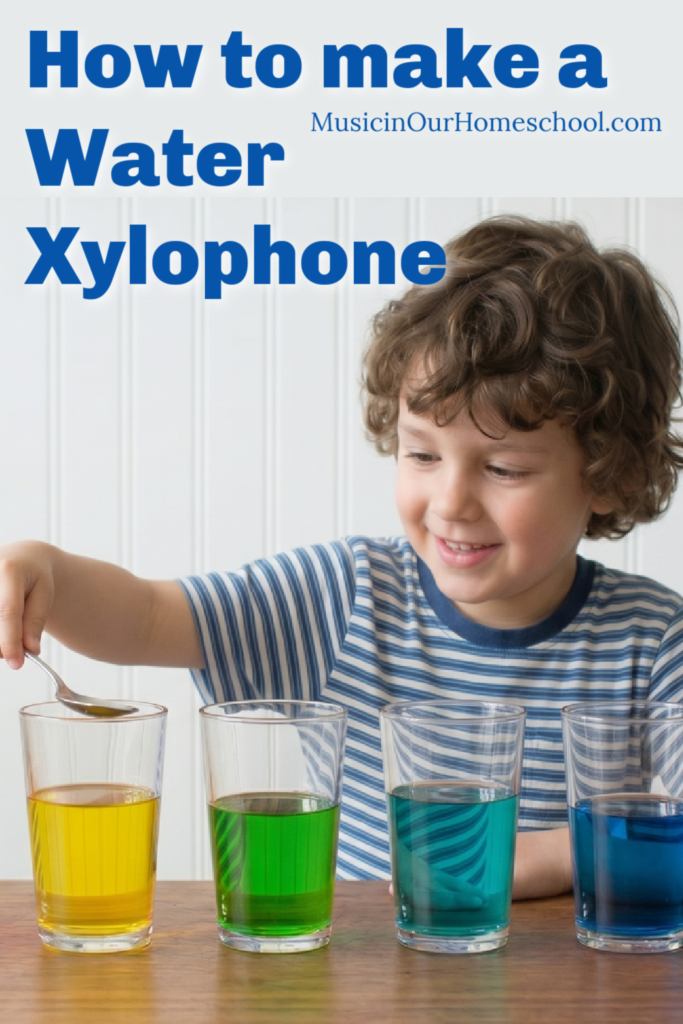
Looking for a fun way to combine music and science in your homeschool? Make a Water Xylophone Experiment is the perfect hands-on activity for elementary and middle school students. Your children will explore musical pitch while learning about sound waves, vibration, and frequency—all using items you probably already have in your kitchen!
This easy STEM activity makes a great addition to a music appreciation lesson, science unit, co-op class, or afternoon of educational fun!
Disclosure: I get commissions for purchases made through affiliate links in this post.
What Is a Water Xylophone?
A water xylophone is made by filling glasses or jars with different amounts of water and gently tapping them to create musical notes. As the amount of water changes, the pitch changes too.
Children love experimenting with the sounds and discovering how music and science work together.
Food coloring (optional, but fun to “see” the different heights of the water, i.e. the different pitches)
Paper and pencil for observations
How to Make a DIY Water Xylophone
Step 1: Arrange the Glasses
Place the glasses in a straight line on a table or countertop.
Step 2: Add Water
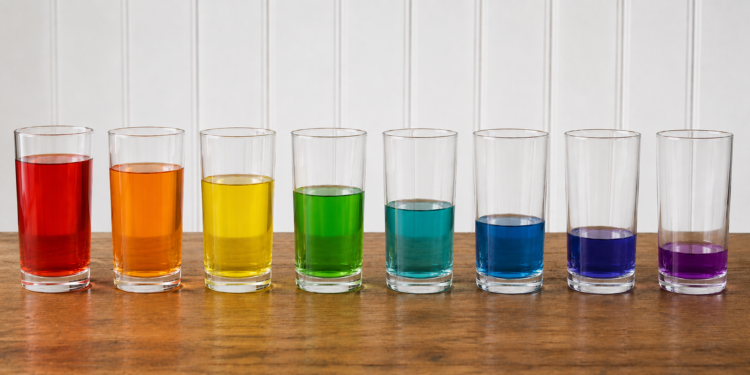
Fill each glass with a different amount of water. You'll have to experiment a bit to get the correct amount of water for the exact pitch you're looking for. It will depend on the type of glasses you're using.
Step 3: Add Food Coloring
You can add food coloring to each glass to make your rainbow water xylophone more visually appealing.
You can mix everything you need from those four colors.
Since the glasses already have different amounts of water, you might need slightly more drops in the fuller glasses to keep the colors looking equally vibrant.
Here's an example:
Glass
Color
Drops
1
Red
4 red
2
Orange
3 red + 2 yellow
3
Yellow
4 yellow
4
Green
4 green
5
Aqua/Turquoise
3 blue + 1 green
6
Blue
4 blue
7
Indigo
3 blue + 1 red
8
Violet/Purple
3 blue + 3 red
Step 4: Tap the Glasses
Use the metal spoon to gently tap each glass.
Listen carefully to each water xylophone sound.
Ask your children:
Which glass makes the highest sound?
Which glass makes the lowest sound?
What pattern do you notice?
Step 4: Sound Science Experiment
See if you can play a familiar tune such as “Mary Had a Little Lamb” or “Twinkle, Twinkle, Little Star.”
Try adding or removing water from different glasses. How does it change the sound?
The Science Behind the Experiment
When you tap the glass, the glass vibrates. Those vibrations create sound waves that travel through the air to your ears. The amount of water inside the glass affects how the glass vibrates.
A glass with more water vibrates more slowly, producing a lower pitch. A glass with less water vibrates more quickly, producing a higher pitch.
The Music Lesson: Understanding Pitch
Pitch is how high or low a sound seems to our ears.
In music:
High pitches sound bright and light.
Low pitches sound deep and rich.
Musicians use pitch to create melodies and harmonies.
As your children experiment with the water xylophone, they are actually exploring one of the most important building blocks of music.
Questions for Discussion
Which glass produced the highest pitch?
Which glass produced the lowest pitch?
How did changing the amount of water affect the sound?
Why do you think different instruments produce different pitches?
Can you think of other examples of vibration creating sound?
Extend the Learning
Create a Recording Sheet
Have your children:
Draw each glass.
Label the water level.
Describe the sound.
Rank the pitches from highest to lowest.
This turns the experiment into a mini science lab activity.
Learn About the Glass Harmonica
Did you know that Benjamin Franklin invented a musical instrument called the glass harmonica
Instead of tapping glasses, musicians played spinning glass bowls with wet fingers. The instrument became very popular during the 1700s and was used by famous composers such as Mozart and Beethoven.
Compare Instrument Families
Discuss how different instrument families create vibrations:
Music and science are closely connected. Both involve observing patterns, making predictions, experimenting, and discovering how the world works.
Activities like this Water Xylophone Experiment help children develop critical thinking skills while having fun making music.
Whether you’re studying sound waves in science or learning about pitch in music, this simple activity is a wonderful reminder that learning happens best when subjects connect together.
Back to Homeschool Giveaway ~ Win a $200 Gift Card (3 winners!) {giveaway is over}
This year, three homeschool families will each win a $200 gift card to the homeschool curriculum company of their choice. Whether your family uses The Good & the Beautiful, Gather Round, Notgrass, My Father's World, Rainbow Resource, or another favorite publisher, you get to decide where to use your prize.
The giveaway runs July 15 through July 24, so be sure to enter before it closes.
Simply complete the entries in the SweepWidget form below. Every participating blogger has helped make this giveaway possible, and each completed entry gives you another opportunity to win.
We hope this giveaway is a blessing to your family and helps make your homeschool year a little more affordable.
Giveaway ends July 24, 2026, at 11:59 PM ET. Three winners will each receive a $200 gift card to the homeschool curriculum company of their choice. Winners will be selected and notified by email shortly after the giveaway ends and will have 48 hours to claim their prize.
By entering this giveaway, you agree to be added to the email lists of the participating homeschool bloggers. Please review the official Terms & Conditions before entering.
Having trouble entering?
If your entry is flagged as spam or SweepWidget won't allow you to continue, please review the troubleshooting guide here:
If you're still unable to enter, please email Sarah at sarah@myjoyfilledlife.com with the email address you're trying to use for the giveaway. She'll add your email to the safe list so you can proceed with your entry.
We apologize for any inconvenience. These safeguards help prevent fraudulent entries and keep the giveaway fair for everyone.