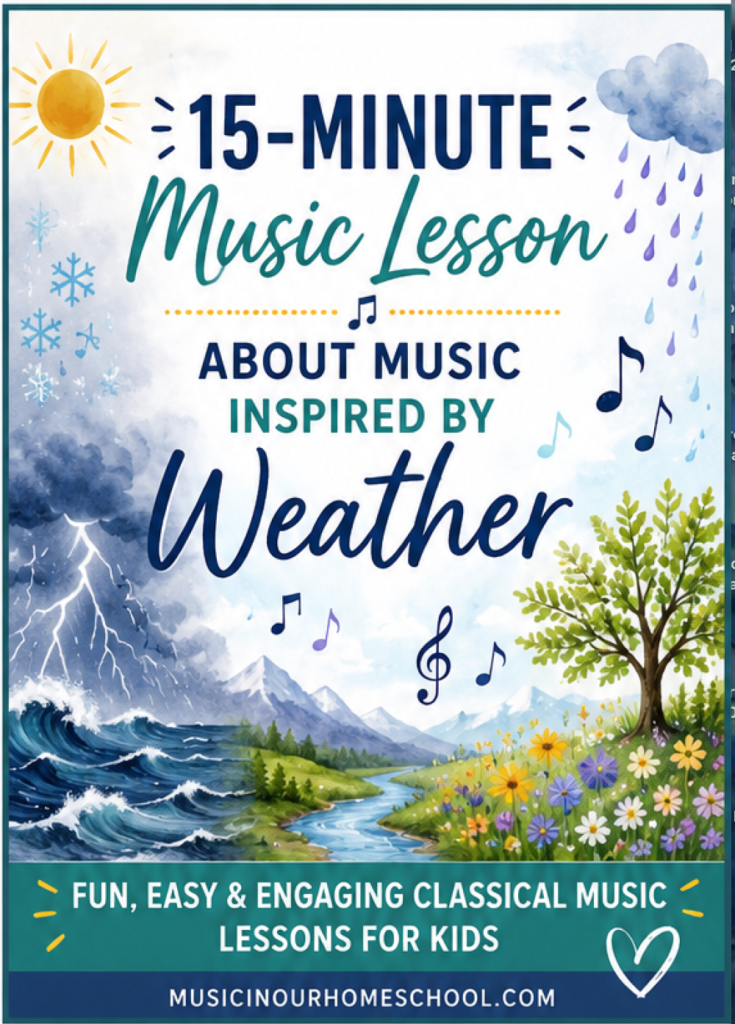
You will love today's “Music Inspired by Weather” music appreciation lesson. Have your children ever listened to music and said, “That sounds like rain!” or “It sounds stormy!”? Children naturally connect music with images and emotions, which is one reason music appreciation can be so enjoyable and effective in a homeschool setting.
One of the easiest ways to help kids engage with classical music is to connect it to something they already understand and experience in everyday life. Weather works perfectly for this. Rain, wind, snow, sunshine, and storms all create moods and sounds that composers have been trying to capture in music for hundreds of years.
Today, I want to share a simple weather-themed music appreciation lesson you can do in about 15 minutes. You don’t need worksheets, a music degree, or even a lot of preparation. Just listen together, ask a few questions, and let your children imagine.
This lesson works beautifully for elementary students, but older students enjoy it too. And because it’s flexible, you can easily adapt it for multiple ages at once.
Start With Rain: Chopin’s “Raindrop Prelude”
One of the most famous weather-inspired pieces is Frederic Chopin’s Prelude in D-flat Major, Op. 28, No. 15, often called the “Raindrop Prelude.”
As you listen, notice the repeating note throughout the piece. Many listeners imagine it sounding like raindrops falling steadily in the background.
At the beginning, the music feels calm and peaceful, almost like a gentle rain tapping against the window. But as the piece develops, the mood changes. The music becomes darker, louder, and heavier, almost as if a storm is rolling in.
As your children listen, ask questions like:
Does this sound like light rain or a heavy storm?
How does the music change?
What pictures come to mind?
Younger children might enjoy softly tapping on the table or their knees along with the “raindrops” they hear in the music.
Hear the Thunderstorm in Vivaldi’s Summer
Next, listen to Antonio Vivaldi’s Summer from The Four Seasons, especially the third movement.
This music is dramatic and exciting. The fast-moving violins sound almost like strong winds whipping through the air before a storm. The energy builds and builds until it feels like thunder and lightning are exploding around you.
This piece is wonderful for helping children become active listeners.
Ask them:
Can you hear the wind?
Where does the music sound stormiest?
Does any part sound like thunder or lightning?
You may be surprised by the details children notice when they are encouraged to listen carefully.
Snowflakes Dancing from Debussy
Now let’s shift to something quieter and more delicate.
Claude Debussy’s “The Snow is Dancing” from Children’s Corner feels completely different from Vivaldi’s storm. The notes flutter and swirl gently, almost like snowflakes floating through the air.
This is a great opportunity to include movement in your music lesson. Let your children move their hands or dance slowly around the room like drifting snowflakes.
Classical music becomes much more meaningful for children when they can physically respond to what they hear.
You can also ask:
Does this music feel cold or warm?
Is the snow falling quickly or slowly?
Does this sound peaceful or exciting?
A Storm at Sea: Rossini’s William Tell Overture
If your children enjoy dramatic music, they will probably love the storm section from Gioachino Rossini’s William Tell Overture.
This piece paints a vivid picture of a powerful storm at sea. You can almost hear crashing waves, pouring rain, and booming thunder.
After listening, encourage your children to draw what they imagined while hearing the music. Some children may picture ships in rough waters, while others may imagine dark clouds rolling over mountains or lightning splitting the sky.
This kind of activity helps children connect visual imagination with musical storytelling.
End With Peaceful Sunshine: Beethoven’s Pastoral Symphony
After all the dramatic weather, it’s nice to finish with something calm and peaceful.
Ludwig van Beethoven’s Symphony No. 6, often called the Pastoral Symphony, was inspired by nature and the countryside. One beautiful section, “Scene by the Brook,” feels like sitting outside on a warm day listening to birds and flowing water.
This music creates an entirely different atmosphere from the storm pieces earlier in the lesson.
Ask your children:
What kind of weather does this sound like?
Does this remind you of any place you’ve visited?
What do you hear happening in nature?
One of the wonderful things about music appreciation is that there are no wrong answers. Different children often imagine completely different scenes while listening to the same music.
Additional Music Inspired by Weather Music to Explore
If your children enjoy this lesson, here are a couple more weather-inspired classical pieces to try:
Richard Strauss — An Alpine Symphony (especially the thunderstorm section)
Camille Saint-Saëns — “Aquarium” from The Carnival of the Animals
You can spread these out over several days or revisit them during morning time throughout the month.
Why Music Appreciation Works So Well in Homeschool
One reason I love lessons like the Music Inspired by Weather one today is that they don’t require pressure or perfection. Children don’t need to memorize facts or understand complicated music theory to begin appreciating beautiful music.
They simply need opportunities to listen, imagine, notice, and enjoy.
Short, consistent music lessons often have a bigger impact than long, complicated ones that rarely happen. Even 15 minutes a few times a week can help children grow in listening skills, creativity, emotional awareness, and appreciation for the arts.
And for homeschool moms, lessons like this make the fine arts feel manageable rather than overwhelming.