Today is the perfect time for homeschool families to pause, breathe, and prepare for a fresh start and set up a . After weeks of Christmas School, concerts, recitals, holiday travel, and festive chaos, most of us feel ready for a reset. And if you’re like many homeschool moms I talk to, one of your goals is finally making music a consistent, joyful part of your homeschool rhythm!
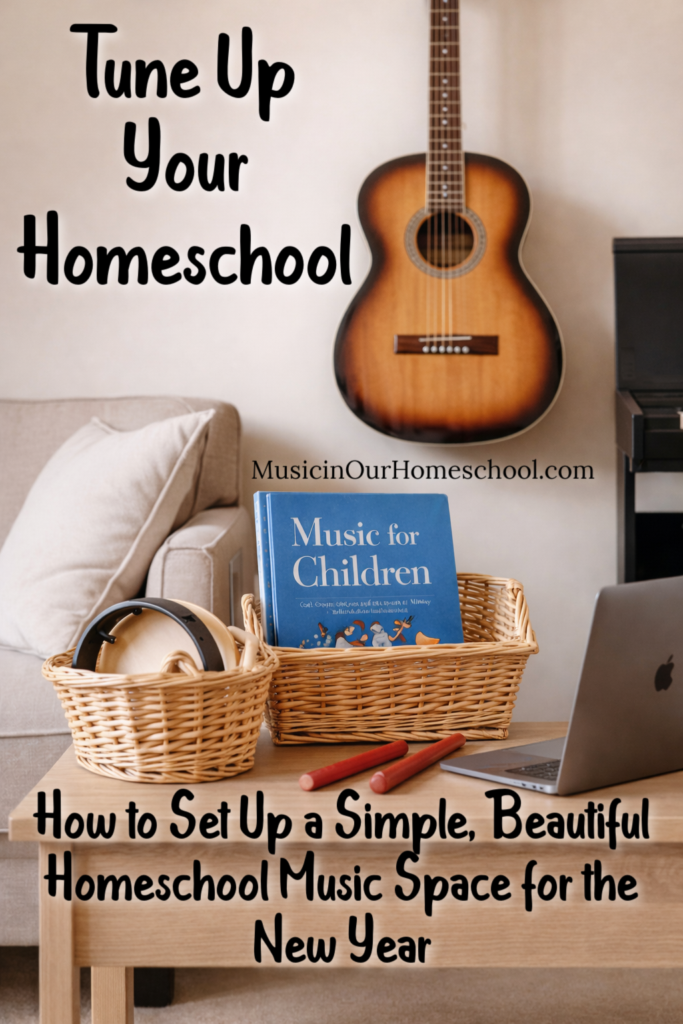
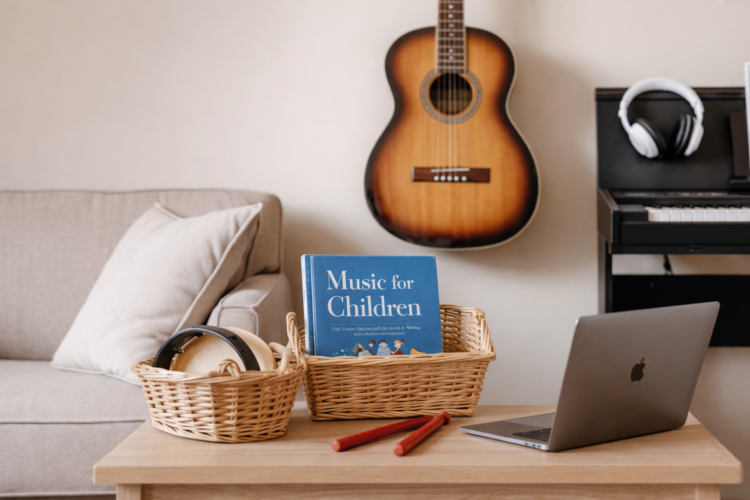
Imagine your children engaged in a homeschool music space filled with inspiration!
But here’s the truth: if your music materials are scattered, if instruments are buried, and if lessons require too much prep or technology wrangling, music simply will not happen. We all know what it’s like for the “extras” to fall off the schedule once real life kicks in.
That’s why this post is designed to help you tune up your homeschool and set up a homeschool music space that's simple, beautiful, functional, and actually supports your routine. With a few small shifts in organization and mindset, you can make music one of the most pleasant, low-stress parts of your homeschool week.
Today, you’ll learn:
Why including music in your homeschool matters
How to set up a practical and inviting homeschool music space
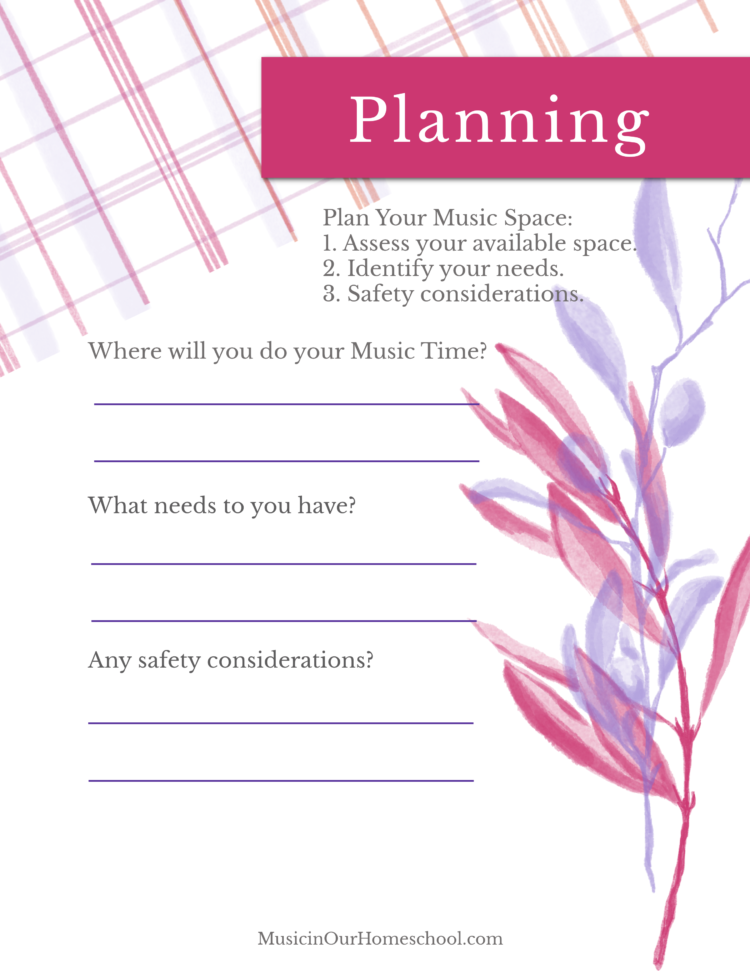
Safety considerations for families with younger children
How to choose the right instruments for your kids’ ages
Affordable ways to include music without adding strain to your budget
Scheduling strategies that make music consistent and realistic
How to use tools like Music in Our Homeschool to simplify your planning
Why Make Room for Music in Your Homeschool?
Before we organize shelves or rearrange furniture, it’s worth remembering why music is worth the effort in the first place.
Research consistently shows that music education benefits children in powerful ways:
But the benefits go beyond academics. Music enriches family life. It brings joy into ordinary days. It gives children something meaningful to carry into adulthood, even if they never become professional musicians.
And here’s the best part: music does not have to be complicated or lengthy. A simple, daily or weekly dose of musical exposure—listening, learning, playing, or exploring—has enormous impact over time. That’s why I created the 15-Minute Music Method at Music in Our Homeschool: short, consistent lessons add up to something truly transformative.
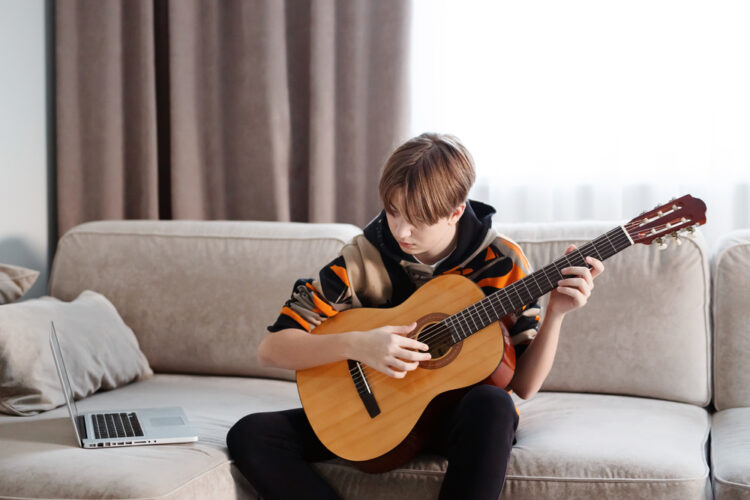
Transform your learning environment into a vibrant homeschool music space!
Disclosure: I get commissions for purchases made through affiliate links in this post.
Step One: Create a Simple, Inviting Music Space
You do not need a dedicated music room or expensive equipment. Many families use a corner of the living room, the dining room table, or even a rolling cart.
What matters more than space is intentionality.
Choose a comfortable location for your homeschool music space.
Kids settle more easily in a place that feels cozy and calm. My own family uses our living room, where we have a couch, chairs, a coffee table, and a window that lets in natural light. A beautiful space encourages you to return to it day after day.
Keep materials accessible.
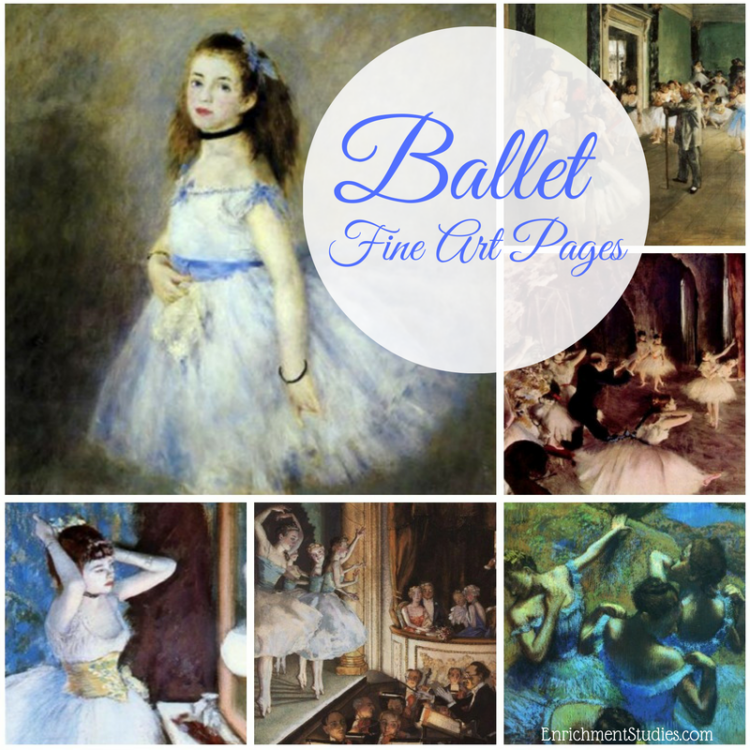
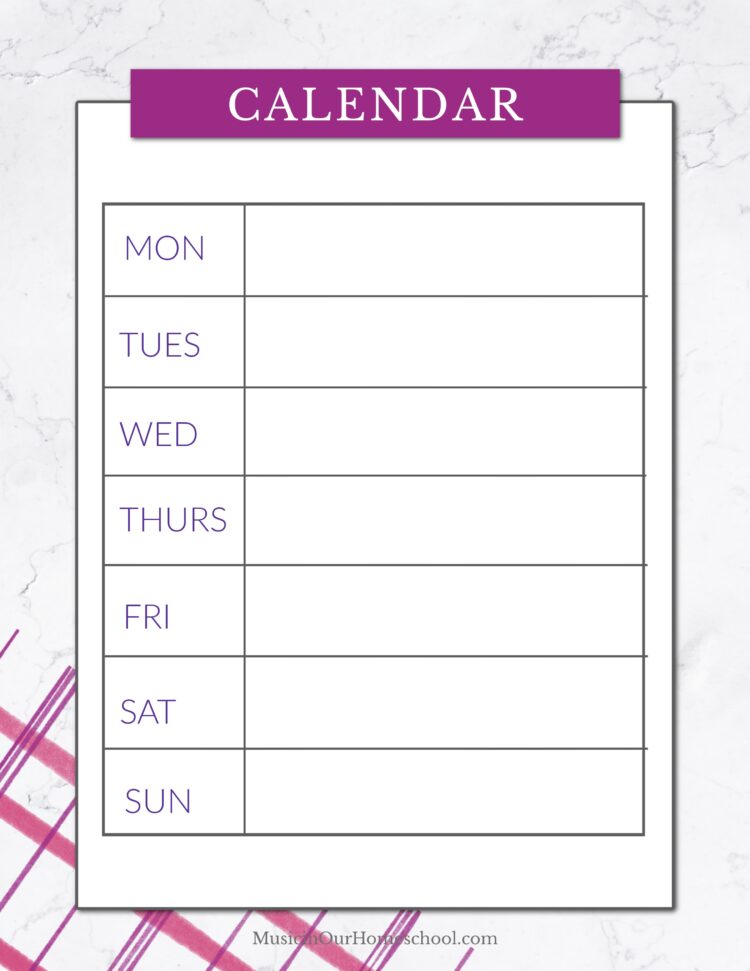
A single basket or bin can make all the difference. Place your music books, printables, Fine Art Pages, or Music Lesson Calendar in an easy-to-grab location. When resources are visible and ready, you’re much more likely to use them.
Make use of the screens you already have.
You can pull up any of my online courses from your phone, tablet, laptop, or smart TV. Many moms simply connect their device via Bluetooth, Roku, or Apple TV to a larger screen for the kids to watch.
Add a touch of beauty.
A framed print (such as Fine Art Pages), a shelf of instruments, or even a seasonal decoration can turn a corner into a purposeful learning space. When the space inspires you, music becomes a joy rather than a chore.
Step Two: Think Through Safety and Practical Setup
This step is especially important if you have toddlers or preschoolers roaming around.
Here are a few things to consider:
Store heavy instruments safely. Guitars, violins, and especially electric instruments should be kept out of reach where they can’t be pulled over. Wall hook mounts and sturdy stands help.
Manage cords wisely. If an amp or keyboard cord crosses a walkway, cover it with a rug or secure cable protector.
Monitor headphone volume. Teach kids how to set safe and comfortable volume levels so they don’t damage their hearing.
Avoid small or chewable parts. Certain shakers or rhythm instruments have metal components that can be unsafe for children who still mouth objects. Wooden instruments are generally sturdy and safe, but check them periodically for splinters.
Remember: you can get creative. For years, we kept our electric piano in the laundry room because it was the only space where a child could practice without waking napping siblings. Small spaces can work beautifully if you think outside the box!
Step Three: Choose Instruments That Fit Your Child’s Age
Choosing age-appropriate instruments makes progress smoother and more enjoyable.
Here are general guidelines:
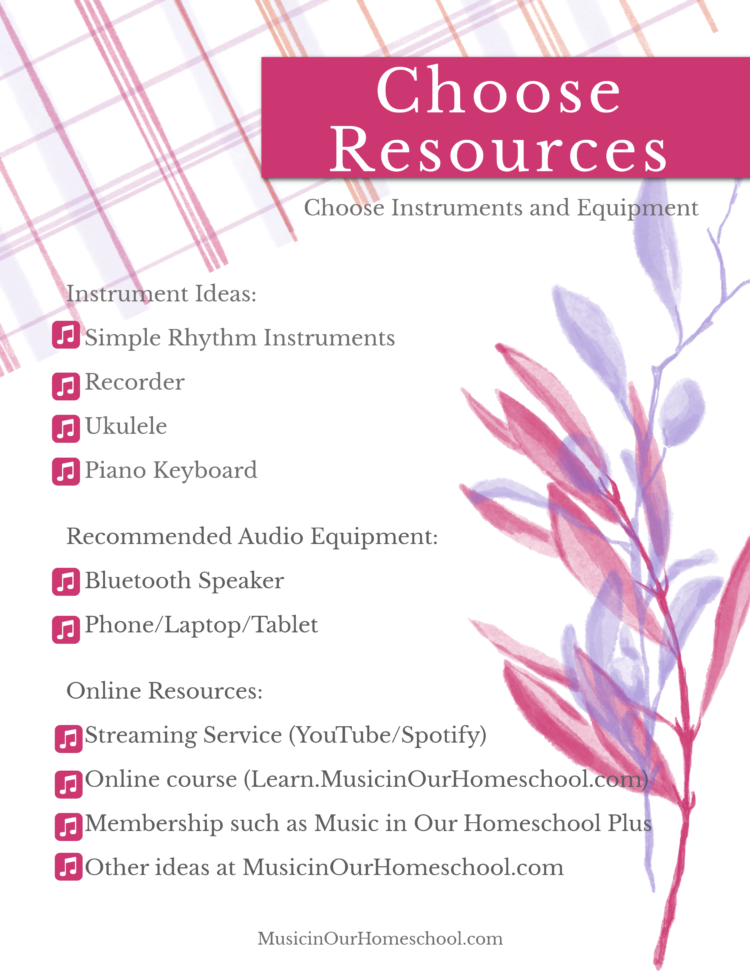
Guitar: Ages 10 and up (younger kids often lack finger strength).
Violin: As young as age 3 with a Suzuki-trained teacher.
Recorder: Best for ages 8 and up.
Piano: Ages 7 and up for full-size keys; KinderBach can introduce basic piano concepts as early as age 3.
Ukulele: The ukulele is a great option for young elementary ages; the fretboard is smaller and easier to navigate. But older kids and teens love it, too.
Thrift stores, Facebook Marketplace, and local music shops are treasure troves for affordable supplies and gently used instruments. Don’t overlook pawn shops either—they often carry keyboards, guitars, and drum pads at excellent prices.
Step Six: Budget-Friendly Ways to Include Music
Music does not need to strain your homeschool budget. Try these creative ideas:
Ask grandparents to gift music lessons, instrument rentals, or course access.
Barter with a music teacher by offering tutoring, meals, or cleaning in exchange for lessons.
Share the cost of a teacher with another family.
Choose drum pads instead of full drum sets for beginning drummers, especially if noise is an issue
Borrow or rent instruments to try before purchasing.
End the week with music, art, poetry, and something creative.
Loop Scheduling
Loop scheduling is a plan to rotate through music, art, and other subjects without tying them to a specific day.
Block Scheduling
Dedicate one afternoon each month to a deep-dive composer study or hands-on project.
There is no right or wrong way. Choose a rhythm that fits your family size, your season of life, and your personality.
Final Thoughts: A Music Routine That Actually Works
As you look toward January, remember this encouragement: You don’t need to create everything yourself. You don’t need to know how to teach music. You don’t need hours each week or a perfect schedule.
You simply need:
a small, inviting space
a simple plan
accessible tools
and a routine you can realistically follow
Even fifteen minutes a week can transform your homeschool. With consistency, beauty, and a bit of preparation, music becomes not another task to check off, but a joyful, steady part of your home culture.
If you want truly zero-prep music lessons ready for you each month, explore the Music in Our Homeschool Plus membership. It includes the Music Lesson Calendar of the Month, Fine Art Pages, multi-age courses, and a full library of lessons for preschool through high school.
Here’s to a musical, meaningful, and beautifully refreshed homeschool in the new year. Creating a dedicated homeschool music space can truly enhance your children's learning experience!
Looking for a great music class option for your homeschool?
Music and Art of America: 250 Years of Freedom invites students on a powerful journey through American history by exploring how music and visual art have told the story of courage, struggle, faith, and innovation from the Colonial era to today. Each 15-minute music lesson connects a defining musical style with an iconic artwork to reveal how creative expression both shaped and reflected the nation’s pursuit of freedom. Through listening, reflection, and visual inspiration, students discover that the soundtrack—and the canvas—of America is as diverse, vibrant, and resilient as its people.