
How to Save Money Homeschooling Music (E111)
Click here for Your Personalized Music & Fine Arts Path!:
Music education can feel like one of the hardest subjects to include in your homeschool.
Not because it isn’t valuable—but because it can feel expensive, complicated, and a little intimidating.
Maybe you’ve thought:
- “Private lessons cost too much.”
- “Instruments are expensive.”
- “I don’t know enough to teach music.”
- “We’ll add it later when we have more time or money.”
But here’s the truth I want you to hear today:
You do not have to spend a lot of money to give your children a rich, meaningful music education.
In fact, some of the very best musical experiences come from simple, consistent, low-cost habits.
Let’s walk through some practical ways to save money while still creating a beautiful, music-filled homeschool.
Start with a Simple Mindset Shift
When most people think of music education, they picture:
- Weekly private lessons
- Expensive instruments
- Formal recitals
- Thick music books
And while those things can be wonderful, they are only one version of music education.
In your homeschool, you get to decide what really matters.
Ask yourself:
- Do I want my child to love music?
- Recognize instruments and styles?
- Feel confident singing or trying an instrument?
- Understand and enjoy great music?
When you define your goals this way, something powerful happens:
You realize that many of these goals can be achieved with little to no cost.
Music education becomes less about performance and perfection—and more about exposure, enjoyment, and understanding.
And that shift alone can save you hundreds (or even thousands) of dollars over the years.
Use What You Already Have
Before you buy anything new, take a look around your home.
You may already have more musical resources than you think:
- A piano or keyboard
- A guitar or ukulele tucked in a closet
- Simple rhythm instruments
- A phone or tablet for playing music
And don’t forget one of the most powerful tools of all:
Your voice.
Singing together—whether it’s folk songs, hymns, or fun family favorites—builds:
- Pitch matching
- Rhythm skills
- Memory
- Language development
- Emotional connection
And it’s completely free.
Start with what you already have. You might be surprised how far it takes you.
Take Advantage of Free Resources
We live in an incredible time for music education.
You can access world-class performances and learning tools without spending a dime.
Here are a few simple ideas:
- Watch performances on YouTube
- Listen to playlists on Spotify or other streaming apps
- Read composer biographies online
- Try free rhythm or ear-training apps
- Listen to music podcasts
And don’t overlook your local library.
Libraries often offer:
- Music CDs and audiobooks
- DVDs of concerts and musicals
- Children’s books about composers
- Access to online learning platforms
- Even instruments to borrow in some areas
The key is not to use everything at once.
Instead, choose one simple focus at a time:
“This month, we’re listening to one composer.”
That kind of simplicity keeps music affordable—and actually doable.
Avoid the “All-at-Once” Trap
This is one of the biggest ways homeschool families overspend.
It’s easy to get excited and think:
“We should do piano lessons, music theory, composer study, AND instrument exploration…”
And suddenly you’ve spent a lot of money—and created a schedule that’s overwhelming.
Instead, try this:
Do less, but do it consistently.
A simple 15-minute music time each day can include:
- Listening to a piece of music
- Singing a song
- Learning one small concept
That’s it.
Consistency matters far more than complexity.
Choose Multi-Age, Reusable Resources
One of the best ways to save money in your homeschool is to choose resources that work for multiple ages.
Music is perfect for this.
Your whole family can:
- Listen to the same composer
- Enjoy the same piece of music
- Participate at their own level
This means:
- Fewer purchases
- Less planning
- More family connection
And when you can reuse materials year after year—or pass them down to younger siblings—you multiply your savings even more.
This is exactly why I designed the Music in Our Homeschool membership to be multi-age and reusable, so one lesson can work for your whole family.
Be Strategic About Private Lessons
Private lessons can be wonderful—but they are also one of the biggest expenses in music education.
Instead of asking:
“Should we do private lessons?”
Try asking:
“When is the right time?”
Here are a few ways to save money:
- Wait until your child shows real interest
- Start with short-term lessons instead of long commitments
- Try group classes through a homeschool co-op
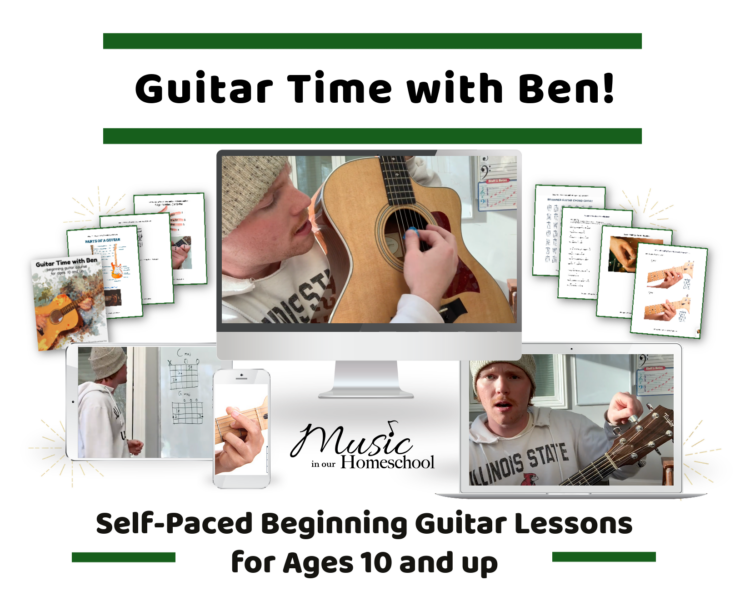
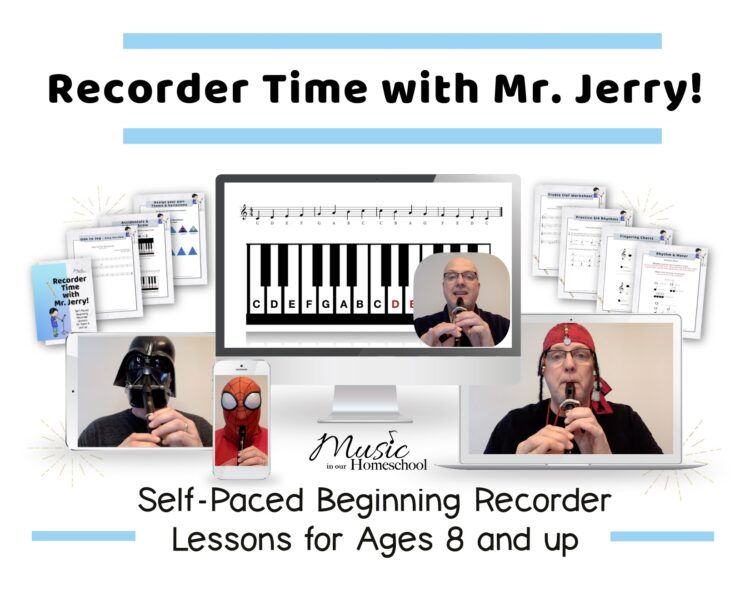
- Look into online lessons or self-paced courses
- Take breaks during busy seasons
Waiting can actually lead to:
- Better focus
- Faster progress
- Less wasted money
Rotate and Borrow Instruments
It’s easy to feel like you need to provide every musical opportunity.
But you don’t need:
- A piano
- A violin
- A guitar
- A drum set
All at once.
Instead:
- Focus on one instrument at a time
- Borrow from friends or family
- Rent before buying
- Look for secondhand options
Places like Facebook Marketplace or local resale shops often have excellent instruments at a fraction of the cost.
This alone can save you hundreds of dollars.
Watch Out for Hidden Costs
Sometimes it’s not the obvious expenses that hurt your budget—it’s the hidden ones.
Like:
- Buying too many resources you don’t use
- Switching curriculum too often
- Signing up for lessons too early
- Purchasing instruments that sit unused
Before you spend, ask:
“Will we actually use this consistently?”
That one question can save you more money than anything else.
Build a Simple Daily Rhythm
Here’s the real secret to both saving money and succeeding in music education:
Consistency beats complexity every time.
You don’t need:
- Long lessons
- Elaborate plans
- Expensive programs
You just need a simple rhythm.
Even 15 minutes a day can:
- Build familiarity
- Grow confidence
- Develop a love for music
And over time, those small, consistent steps create something truly meaningful
What Really Matters
At the end of the day, music education in your homeschool is not about:
- Spending the most
- Doing everything
- Achieving perfection
It’s about:
- Creating an atmosphere of beauty
- Giving your children meaningful exposure
- Building confidence and joy
And those things don’t come from money.
They come from your time, your attention, and your consistency.
Ready to Get Started?
If you’re looking for simple, affordable, zero-prep music lessons that fit your real homeschool life, I’d love to help you.
Start here:
- Free Music Lessons: https://MusicinOurHomeschool.com/FreeMusicLessons
- Membership: https://MusicinOurHomeschool.com/membership
You can absolutely give your children a beautiful music education—without overspending.
Start simple. Stay consistent. And enjoy the journey together.
Purchase the April 2026 LIVE Music & Painting Lessons here:
- The 30-minute Music Appreciation/Composer Study Lesson is Inside the Music of a Magical Broadway Hit with composer Stephen Schwartz
- The 1-hour step-by-step painting tutorial lesson is called “Hummingbird Haven.”

April LIVE Music and Painting Lessons
LIVE interactive 30-minute music appreciation and composer study lesson, plus a 1-hour acrylic step-by-step painting lesson.
10 students enrolled
Last updated Jun 1st, 2026
See the YouTube Video “Music education doesn't have to break the bank”
Listen to Podcast Episode 111: How to Save Money in Your Homeschool Music Education (lessons, instruments, courses, etc.)
Listen here or subscribe and follow The Music in Our Homeschool Podcast through your favorite podcast app, such as Apple Podcasts or Spotify!
Read the Podcast Transcript here.
Related Posts to Save Money Homeschooling Music:
- Free Online Piano Lessons from Hoffman Academy
- 15-Minute Music Lesson for Earth Day ~ Music in Nature Series
- 15-Minute Music Lesson: What Is Percussion?