There’s something that happens when children stop simply hearing music and start participating in it.
You can see it in their faces when they clap a rhythm correctly for the first time. Or hear it when they confidently sing along to a familiar folk song. You notice it when they begin moving naturally to the beat of a piece of classical music or excitedly tell you what instrument they heard in an orchestra recording.
Music suddenly becomes real to them. That’s one of the biggest differences between music appreciation that “checks a box” and music education that truly sticks.
The good news? Hands-on music activities don’t have to be complicated, expensive, or time-consuming. In fact, some of the most effective music experiences happen in just a few minutes around your kitchen table or living room floor.
If you’ve ever felt unsure about how to include music in your homeschool beyond simply pressing play, here are some easy ways to make music more active, engaging, and memorable for your kids.
Why Hands-On Music Activities Matter
Children learn best by doing.
We understand this naturally in other subjects. Kids don’t learn math simply by watching someone else solve equations. They don’t learn to read only by listening to audiobooks. They learn through participation, repetition, practice, and interaction.
Music works the same way.
When children clap rhythms, echo melodies, move to a beat, or listen carefully for musical patterns, they begin building genuine musical understanding. They develop listening skills, confidence, coordination, creativity, and even stronger attention spans.
And perhaps most importantly, music becomes something enjoyable instead of intimidating.
This is one reason I’ve always loved keeping music lessons simple and interactive inside Music in Our Homeschool. Short, meaningful activities done consistently over time are far more effective than occasional complicated lessons that leave everyone overwhelmed.
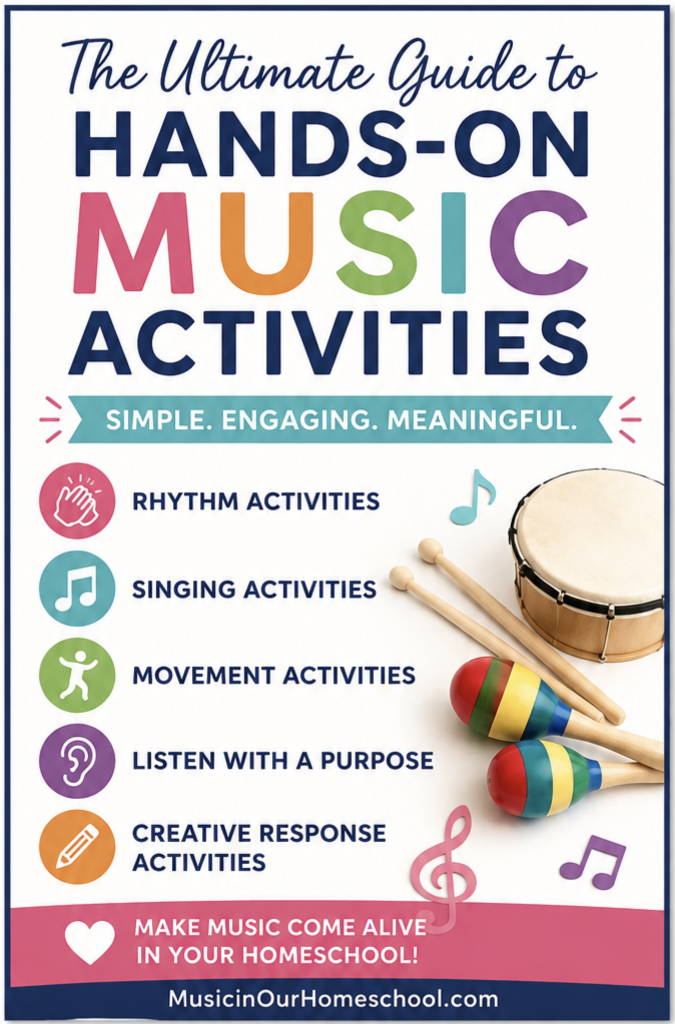
1. Rhythm Activities
Rhythm is one of the easiest places to begin because children naturally respond to beat and pattern.
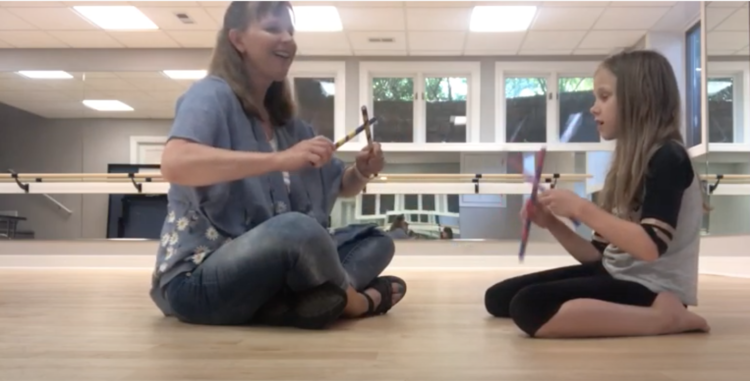
You don’t need drums or formal instruments to teach rhythm. Start with what you already have around the house.
Try:
Clapping along to the beat of a song
Tapping rhythms on the table
Using wooden spoons and bowls as percussion instruments
Marching to music
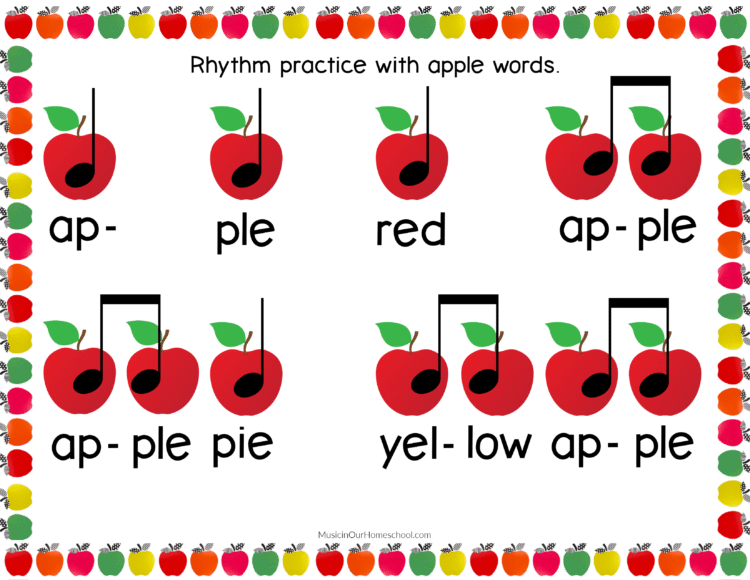
Echoing simple rhythm patterns
Playing “copy this rhythm”
You can even pause music and ask your child to imitate a rhythm they just heard.
These kinds of activities are wonderful because they feel playful while quietly building important musical skills underneath the surface. Children begin learning pulse, tempo, pattern recognition, and coordination almost without realizing it.
In my Beginning Music Theory for Elementary course, rhythm activities like these are woven throughout the lessons because they help children internalize music rather than simply memorize facts about it.
2. Singing Activities
Singing is probably the most powerful musical tool available to homeschool families because every child already carries the instrument with them.
Their voice.
And yet so many parents hesitate here because they don’t feel confident about their own singing abilities.
Please don’t let that stop you.
Your child does not need a perfect performance. They simply need opportunities to participate in music naturally and regularly.
Simple singing activities can include:
Singing folk songs together
Learning hymns
Echo singing
Singing during Morning Time
Adding movement to songs
Singing call-and-response songs
Learning seasonal music together
Children who sing regularly often develop stronger pitch matching, listening skills, and musical confidence over time.
Children are naturally wired to move when they hear music.
Sometimes we accidentally train that instinct out of them by expecting them to sit still during music appreciation. But movement can actually deepen musical understanding tremendously.
Movement activities can be incredibly simple:
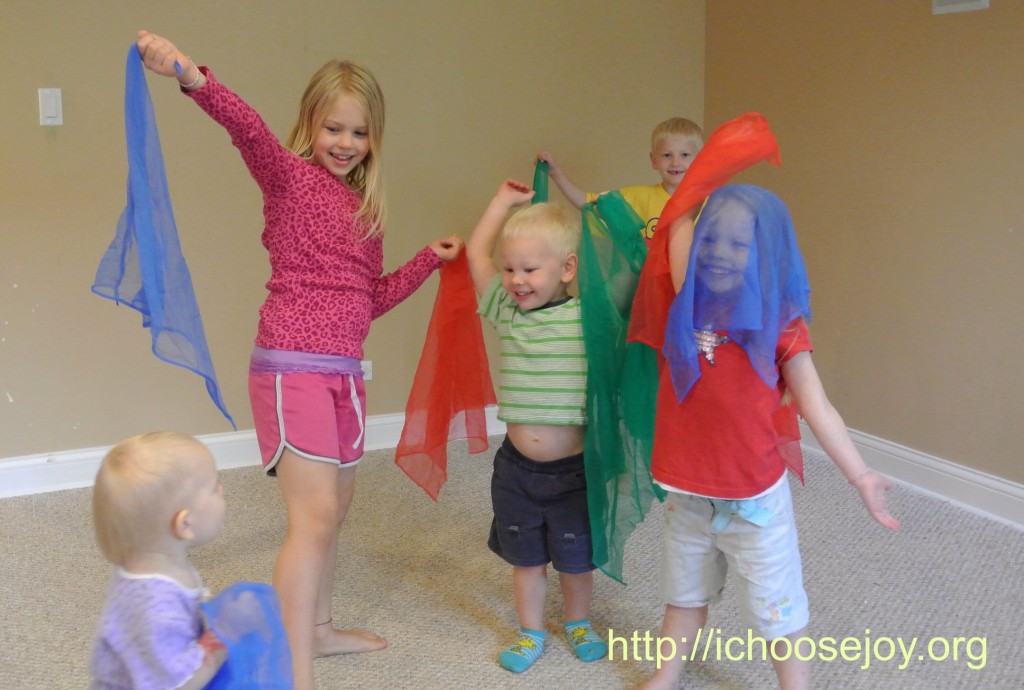
Dancing freely to music
Marching to the beat
Using scarves or ribbons
Pretending to conduct
Acting out the mood of the music
Freezing when the music stops
Walking slowly or quickly, depending on the tempo
One of my favorite questions to ask children is: “What kind of movement fits this music?” You’ll get fascinating answers.
Fast orchestral music might inspire running or jumping. Gentle piano music may lead to swaying or floating motions. Dramatic film music often sparks imaginative storytelling and pretend play.
Movement helps children feel musical elements physically instead of only hearing them intellectually. This works especially well with composers like Igor Stravinsky, movie soundtracks, or musical theater music, where emotion and energy are easy to experience through movement.
4. Listen With a Purpose
Background music absolutely has value. I often encourage families to simply fill their homes with good music throughout the day.
But focused listening creates a completely different experience.
Instead of turning music on passively, give your child something specific to notice.
You might ask:
Do you hear strings or brass?
Is this music fast or slow?
Does the music sound happy, dramatic, peaceful, or mysterious?
Which instrument stands out the most?
Can you hear a repeating pattern?
What images come to mind while listening?
Children don’t need lengthy lectures to begin understanding music. Often, they simply need direction for their attention.
This is one reason music appreciation works so beautifully for homeschool families. Even short listening activities can create meaningful conversations and observations.
And over time, children naturally begin noticing more and more musical details on their own.
5. Creative Response Activities
This is where music often becomes unforgettable.
After listening to music, invite your child to respond creatively.
They could:
Draw what the music sounds like
Paint while listening
Write a short story inspired by the music
Build something with Lego
Create a dance
Act out a scene
Describe the music using colors or emotions
These activities allow children to connect music with imagination, storytelling, art, and even other homeschool subjects.
I especially love combining music with fine art and history because those connections help children see that music is part of a much larger world of ideas and creativity.
If you’re homeschooling multiple children, managing different grade levels, and trying to keep up with everyday life, music can easily become the subject that gets pushed aside.
I understand that completely. That’s exactly why I built Music in Our Homeschool around simplicity and consistency rather than perfection.
Hands-on music activities do not need to last an hour. They can happen in 10–15 minutes.
In fact, short, repeated exposure is often far more effective than occasional marathon lessons. Children grow musically through consistency over time.
One of the biggest misconceptions homeschool parents have about music education is that they need formal musical training before teaching music at home.
You don’t.
You simply need a willingness to learn alongside your children and provide opportunities for them to engage with music regularly.
Press play. Clap the rhythm. Ask a question. Sing together. Move to the music.
That’s enough to begin. And honestly, those small moments often become the memories children carry with them long after homeschool is over!
These lessons are designed to fit naturally into real homeschool life with short, meaningful activities that help children actively experience music without requiring extensive prep from mom.
Because music education doesn’t have to be complicated to be powerful.
Try a Fun Bucket Drumming Activity
Download for free here:
See the YouTube Video: Hands-On Music That Works for Every Child
Listen to Podcast Episode 117: The Ultimate Guide to Hands-On Music Activities in Your Homeschool