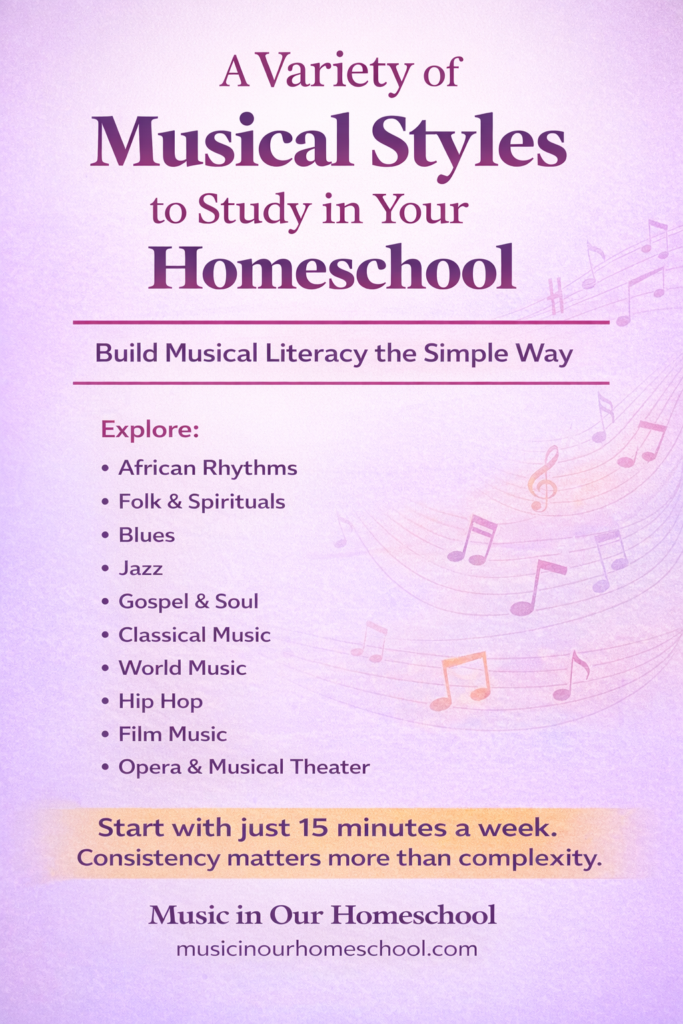
A Variety of Musical Styles to Study in Your Homeschool
One of the simplest and most powerful ways to bring music into your homeschool is this: listen widely.
Not just one composer. Not just one musical era. Not just what feels familiar.
But widely.
When children are exposed to a variety of musical styles, something remarkable happens. Their ears stretch. Their listening deepens. Their understanding of culture expands. Music becomes more than background sound. It becomes a lens through which they understand history, emotion, community, and creativity.
The beautiful part? You do not need to be an expert to make this happen. You simply need intention.
Let’s walk through a range of musical styles you can rotate through in your homeschool. Think of this as a menu. Choose one per week or one per month. Revisit favorites. Over time, your children will develop a broad musical vocabulary that serves them for life.
Why Musical Variety Matters
When children hear only one type of music—whether that is contemporary Christian, pop, classical, or movie soundtracks—their musical vocabulary remains narrow.
But when they regularly hear contrasting styles, they begin to:
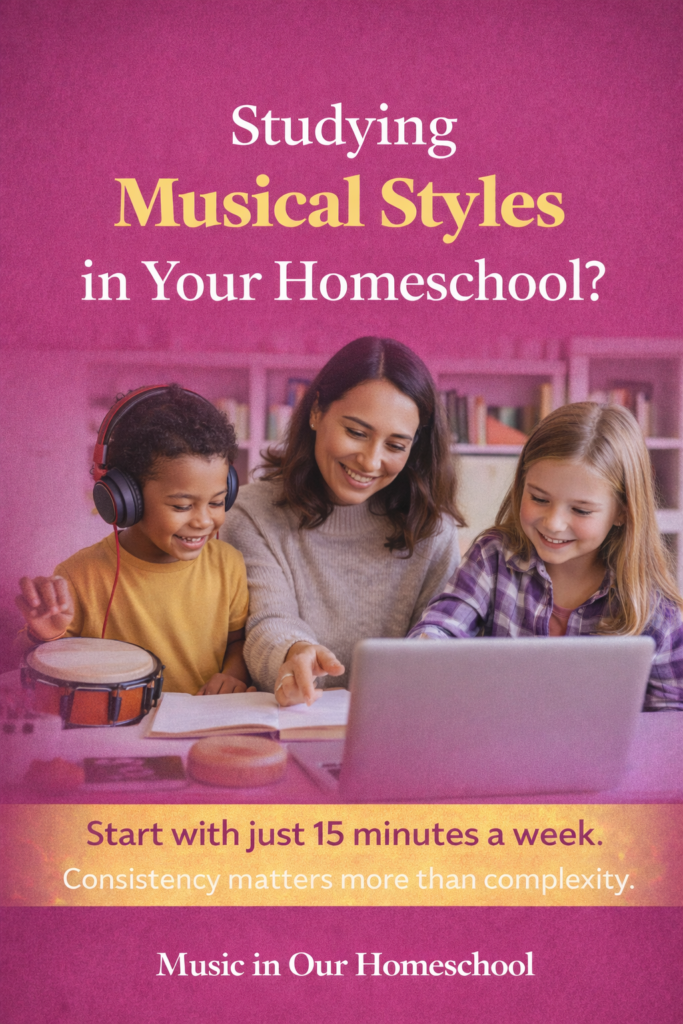
And here is the encouraging part: you do not need hour-long lessons. One intentional 15-minute music lesson per week can make a significant difference over time. Consistency matters more than complexity.
African Rhythmic Traditions
Many musical traditions across the globe trace rhythmic ideas back to West and Central African music.
Unlike concert-based traditions, African musical forms are communal. Everyone participates.
Introduce your children to call and response by clapping patterns back and forth. Explore polyrhythms by layering simple rhythm patterns together. These foundational ideas recur across centuries and genres, including jazz, gospel, blues, and hip hop.
Spirituals and Folk Songs
Spirituals developed among enslaved African Americans in the United States and expressed deep faith, endurance, and hope. These songs often draw on biblical imagery and sometimes carried coded messages.
Folk music—from Appalachian ballads to sea shanties—preserves everyday history long before textbooks existed. These songs tell stories of hardship, work, love, and community.
What makes these styles perfect for homeschool study is their accessibility. They are participatory, singable, and invite involvement.
Courses like my online course A Folk Song a Weekmake this easy by giving you ready-to-use selections from different cultures and eras.
A Folk Song a Week
36 Folk Songs included , so learn one a week throughout a full school-year!
Emerging in the late 19th and early 20th centuries, the blues became one of the most influential American musical forms.
The 12-bar blues pattern makes it ideal for teaching musical form. Students can clearly hear repetition and structure. The blues also introduces expressive storytelling and emotional honesty.
From the blues came many later styles, including jazz and rock.
Jazz
Born in New Orleans in the early 20th century, jazz blends African rhythms, blues harmony, and European instruments.
Its defining feature is improvisation.
Improvisation teaches children that music can be conversational. Musicians listen carefully and respond in real time. Introducing students to artists like Louis Armstrong helps them hear how personality and creativity shape performance.
Jazz encourages creativity while strengthening listening skills.
Purchase the Sound Bites: Jazz Music Appreciation online course here:
Sound Bites: Jazz Music Appreciation
For elementary through high school students. Learn all about the American jazz era of the 1900s through its composers, performers, and music. 15 composers: Benny Goodman's, Bix Beiderbecke, Count Basie, Duke Ellington, Fletcher Henderson, Louis Armstrong, Art Tatum, Cab Calloway, Charlie Parker, Dizzy Gillespie, Fats Waller, Thelonius Monk, John Coltrane, Ray Charles, and Ornette Coleman.
Gospel music emphasizes harmony, repetition, and emotional intensity. It highlights the communal power of music.
Soul music blends gospel passion with rhythm and blues groove. Artists like Aretha Franklin used their voices to express resilience and identity during times of cultural change.
Studying gospel and soul helps students see how music reflects social movements and history.
Classical Music Across the Eras
Classical music is not just one sound. It spans centuries of variety:
Classical study builds understanding of form, orchestration, instrument families, and thematic development. Listening to a symphony movement teaches patience and long-form attention.
World Music Traditions
Broaden your homeschool by exploring music from around the globe:
Study how composers build tension, represent characters with themes, and use tempo changes to affect mood. Film music connects directly with storytelling and narrative structure.