Click here for FREE music lessons:Two Weeks Free Music Lessons

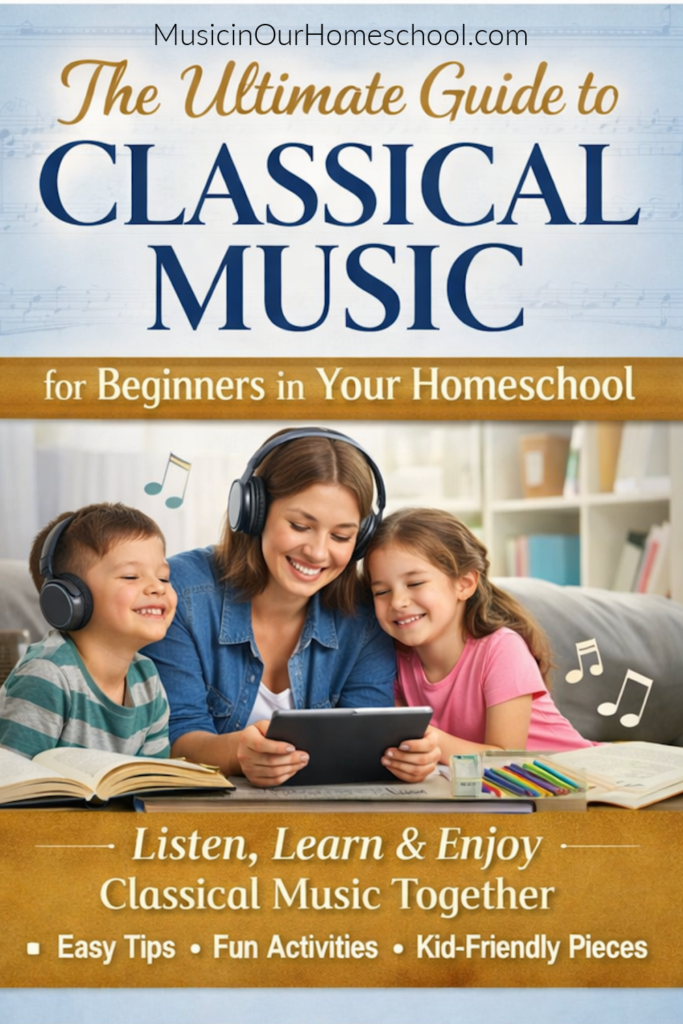
The Ultimate Guide to Classical Music for Beginners (E109)

Click here for Your Personalized Music & Fine Arts Path!:
Personalized Music & Fine Arts Path for Music in Our Homeschool music and art courses

Many homeschool parents tell me that classical music feels like the most mysterious part of music education.

They feel confident reading books together, exploring history, and even doing science experiments—but when it comes to classical music, they hesitate.

Where do you start?

What should you listen to?

How do you talk about the music if you’ve never studied it yourself?

The good news is that classical music appreciation in the homeschool does not need to be complicated. In fact, it can be one of the simplest and most beautiful subjects to include in your day.

This guide will walk you through a gentle, beginner-friendly approach to classical music that works for busy homeschool families and curious children of all ages.

Before we jump into the practical tips, let’s talk about why classical music often feels so intimidating in the first place.

The Ultimate Guide to Classical Music for Beginners

Why Classical Music Feels So Intimidating

Classical music often feels like the hardest place to start in music education.

Many homeschool parents tell me things like:

  • “I didn’t grow up listening to classical music.”
  • “I don’t know what to choose.”
  • “I’m afraid my kids will be bored.”
  • “I feel like I need to know more before I can teach it.”

Those feelings are completely understandable.

Classical music is often presented as academic, formal, and overly complicated—wrapped in timelines, terminology, and expectations that make parents feel unqualified before they even press play.

But here’s the truth I want you to hear as we begin this new season:

You do not need to be a musician to introduce your children to classical music.

And even more importantly:

Classical music in the homeschool is meant to be enjoyed, not mastered.

Redefining Classical Music for Your Homeschool

At its core, classical music is simply music that has lasted.

It’s music written to express joy, sorrow, celebration, worship, storytelling, and human emotion. These composers were not writing for textbooks—they were writing for real people, real events, and real moments in life.

When we redefine classical music this way, it stops feeling like an intimidating subject and starts feeling like an invitation.

Simply invite your children to listen.

And that is more than enough.

The Ultimate Beginner-Friendly Approach to Classical Music: 7 Tips

If you’re new to classical music—or returning after a long break—here’s a gentle, homeschool-friendly way to begin.

Start with Listening, Not Explaining

One of the biggest mistakes we make is thinking we need to explain everything first.

You don’t.

Classical music appreciation can begin simply by listening.

Try this:

Afterward, ask just one question:
“What did you notice?”

There is no right or wrong answer. Silence is okay. Curiosity will grow over time.

Choose Short, Approachable Pieces

You do not need to start with long symphonies or operas.

Begin with:

These pieces are engaging, memorable, and welcoming—especially for younger listeners.

Positive first experiences matter.

Let Music Be Part of Everyday Life

Classical music does not always require focused attention.

Some of the most powerful listening happens when music plays in the background during:

  • art time
  • quiet reading
  • free play
  • lunch or snack time

This kind of listening builds familiarity naturally, without pressure or resistance.

Over time, you may notice your children recognizing melodies, asking to hear a piece again, or humming along—and that’s a sign that music is becoming part of their world.

Here are some pieces to start playing in your homeschool.

Use Stories Instead of Timelines

When you’re ready to add context, skip the dates and focus on stories.

Children connect with:

  • composers who were once kids
  • music written for celebrations or special events
  • pieces inspired by nature, stories, or emotions

A simple story creates a personal connection—and connection is what leads to lasting appreciation.

Here are some of my favorites:

Repeat Music Often

Classical music is not meant to be heard once and checked off.

Repetition helps children:

  • recognize patterns
  • feel comfortable with unfamiliar sounds
  • notice new details each time

The first listen may feel strange. The second feels familiar. The third often becomes a favorite.

Repetition is how appreciation grows.

Invite Creative Responses

Music appreciation doesn’t require worksheets.

Some wonderful ways kids can respond include:

  • drawing what the music makes them imagine
  • moving or dancing to the rhythm
  • building scenes inspired by what they hear
  • telling a story that matches the mood of the music

There is no wrong response. Engagement matters more than accuracy.

Keep It Short and Sustainable

This is one of the most important principles I share with homeschool parents.

You do not need long lessons, or even daily instruction. You especially don't need perfection.

Fifteen minutes at a time—consistently—is far more powerful than occasional long lessons.

Small habits create lasting results.

Encouragement as We Begin Season 3 of the Music in Our Homeschool Podcast

As we step into Season 3 of the Music in Our Homeschool podcast, my hope is that you feel encouraged—not pressured.

You don’t need to teach everything, and you don’t need to know everything.
You simply need to create space for music to exist in your home.

When you press play, you are giving your children a gift:

  • listening skills
  • emotional awareness
  • cultural understanding
  • and a lifelong appreciation for beauty

And that gift matters.

Looking Ahead

At Music in Our Homeschool, we will continue to focus on:

  • realistic, doable homeschool music education
  • encouragement for overwhelmed homeschool parents
  • beginner-friendly guides and composer spotlights
  • and the reminder that music belongs in every homeschool

Whether you’re just beginning or have been including music for years, you’re welcome here.

Thank you for being part of this journey, and thank you for choosing to make music part of your homeschool story!

Enjoy this Printable Pack: Edvard Grieg and Peer Gynt Music Lesson Composer Study

Only $3 at my TPT store here.

15-Minute Music Lesson on Grieg and Peer Gynt

Purchase the “100 Delightful Classical Music Pieces” online mini-course here:

Product image

100 Delightful Classical Music Pieces Mini-Course

Listen to 100+ of the most beautiful and exciting classical music pieces of all time.

1180 students enrolled

Last updated Mar 4th, 2026

Select a Pricing Plan
Buy now

Here's a Free Printable set you can use with today's lesson: Study a Composer

See the YouTube Video “Making Music Accessible – What We Learned in 2 Years”

https://youtu.be/aZ92KMbyoIg

Listen to Podcast Episode 109: The Ultimate Guide to Classical Music for Beginners (Perfect for Homeschool Families)

Listen here or subscribe and follow The Music in Our Homeschool Podcast through your favorite podcast app, such as Apple Podcasts or Spotify!

Read the Podcast Transcript here.

Related Posts:

Join the Music in Our Homeschool Plus music and fine arts membership experience for preschool through high school!

Similar Posts

Leave a Reply

Your email address will not be published. Required fields are marked *

This site uses Akismet to reduce spam. Learn how your comment data is processed.

Music Lessons for Holidays and Special Days self-paced online course for elementary students. Learn about some great music associated with holidays throughout the year, plus fun days such as Star Wars Day, Dr. Seuss Day, and Talk Like a Pirate Day!